

Why is it important
Climate change is a crucial factor affecting the global economy. The energy sector faces challenges in adapting to international standards, such as greenhouse gas (GHG) reduction targets under the Paris Agreement and the European Union’s Carbon Border Adjustment Mechanism (CBAM). These regulations influence cost structures and business operations, especially for industries relying on fossil fuels. In Thailand, the government has strengthened its climate ambitions through Nationally Determined Contribution (NDC) 3.0, setting a pathway towards Net Zero Emissions by 2050 and establishing an intermediate target to reduce net GHG emissions by approximately 47 percent by 2035, compared with the 2019 baseline year. Additionally, policies such as Thailand Taxonomy have been introduced to encourage environmentally friendly investments. These factors make it essential for the energy sector to adapt to ensure long-term sustainability. Climate change also affects economic and social stability, increasing the frequency of natural disasters such as droughts, storms, floods, and wildfires may affect power plant infrastructure, operating costs, water resource security, and overall financial performance.
B.Grimm Power recognises both the risks and opportunities associated with climate change. We are committed to implementing sustainable strategies to adapt to and reduce GHG emissions, aligning with global standards such as the Task Force on Climate-Related Financial Disclosures (TCFD). We have also implemented Internal Carbon Pricing (ICP) to manage costs and assess carbon impact on our business. These initiatives enable us to comply with increasingly strict environmental regulations, develop low-GHG energy projects, and contribute to a sustainable energy transition.
Targets and Performance
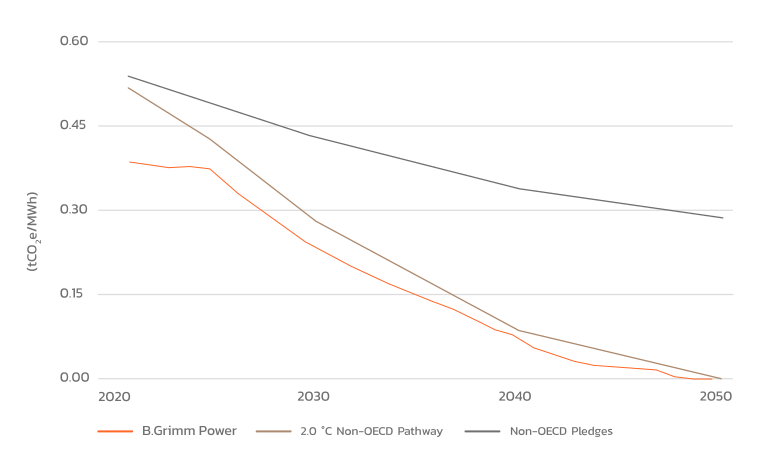
B.Grimm Power is firmly committed to achieving Net Zero Carbon Emissions by 2050, in alignment with the Paris Agreement. Our transition strategy is aligned with the 2.0°C pathway for non-OECD countries, as outlined by the International Energy Agency (IEA), to limit global temperature rise to well below 2°C. We aim to balance climate responsibility, energy security, and industrial competitiveness by maintaining reliable electricity supply while increasing the share of clean energy. In line with the GHG Protocol, B.Grimm Power has set GHG reduction targets, primarily focusing on reducing Scope 1 and Scope 2 emissions, which represent the main emissions sources from power generation business. The targets cover at least 95 percent of the organisation’s total GHG emissions across the operations, with the management scope to be progressively expanded to other indirect emissions across the value chain.
| 2025 Performance |
2030 Targets |
|
|---|---|---|
| Renewable energy installed1 (percentage of total installed capacity) | 31% | ›50%3 |
| Scope 1&2 GHG emissions intensity (tCO2e/MWh) | 0.372 | ‹0.2802 |
1 Based on all power plants operating at year-end
2 Or reduce by no less than 27 percent from a 2021 baseline, covering at least 95% of the organisation’s total greenhouse gas emissions across its operations.
3 Gas 38.5%, Solar 37.8 percent, Wind 18.8 percent, Hydro 4.8 percent, back up (non-operation diesel power plant), and waste <0.2 percent.
GHG Emissions Intensity Projection
Management and Strategy
Commitment
B.Grimm Power has established a robust and systematic climate governance structure, integrating climate-related risks and opportunities into our strategic decision-making process across both existing operations and future business expansions. We are determined to deliver long-term value by considering the benefits and impacts on all stakeholders, upholding strong corporate governance principles, ensuring proper internal controls, and maintaining effective checks and balances. These foundations are essential to driving our organization toward sustainability and our Net Zero Carbon Emissions target by 2050.
With a strong commitment to developing stable and accessible energy with minimal environmental impact, we have a No Coal Policy and are actively expanding renewable energy investments, improving power plant efficiency of existing power plants to improve energy use and reduce greenhouse gas emissions per unit of production. In parallel, we are exploring clean energy technologies, such as hydrogen co-firing with natural gas, and offering clean energy solutions to industrial customers, reducing their carbon footprint while positively impacting the broader energy system.
We are committed to contributing to global climate goals in line with the Paris Agreement, while ensuring a stable electricity supply for our industrial customers through co-generation power plants and by increasing the share of clean energy in our portfolio. Our transition strategy aligns with the 2.0°C pathway for non-OECD countries, as outlined by the International Energy Agency (IEA). Our GHG reduction strategy prioritises responsibility, alongside maintaining energy security and enhancing industrial competitiveness. We are firmly committed to achieving Net Zero Carbon Emissions by 2050, in alignment with international frameworks.
Governance Structure
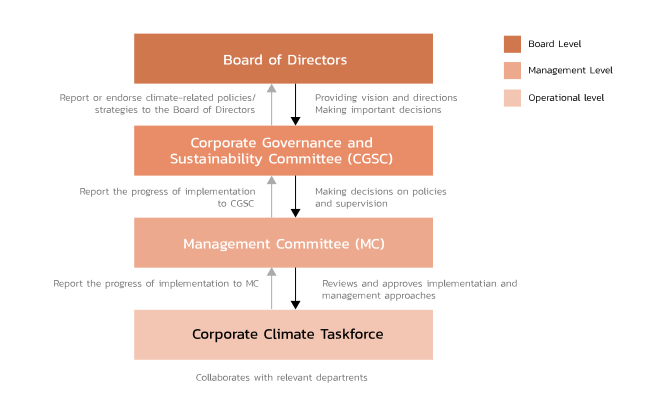
Climate Change Governance Structure
Board’s oversight of climate-related risks and opportunities
- The Board of Directors (BoD) plays a crucial role in overseeing climate-related risks and opportunities which may impact B.Grimm Power’s business activity. In this regard, the BoD is responsible for ensuring that the company’s climate strategy aligns with its broader business policies.
- The Corporate Governance and Sustainability Committee is a sub-committee appointed by the Board of Directors. It is tasked with making decisions on matters related to the economy, environment, society and corporate governance in relation to sustainability and climate change as follows:
- Assessing the potential impact of climate-related risks on the company's operations, finances, and reputation, including risks associated with extreme weather events, changing regulatory requirements, and shifting consumer preferences.
- Developing strategies and policies for addressing assessed climate-related risks and opportunities such as investing in renewable energy sources, implementing energy efficiency measures, or developing new products and services to meet changing customer needs.
- Ensuring that the developed strategies are effectively implemented though detailed action plans and monitored over time by setting targets and corporate KPIs to track progress, reviewing performance regularly, and making adjustments as necessary
- Ensuring transparency in the company's management of climate-related risks and opportunities through regular reporting on environmental performance, as well as disclosing relevant information in financial filings and other public communications.
The Management Committee’s (MC) role in assessing and managing climate-related risks and opportunities
- Conducting comprehensive risk assessment for reporting to the Board of Directors, identifying and evaluating the potential impact of climate-related risks on the company's operations, finances, and reputation, including evaluating the risks associated with extreme weather events, evolving regulations, and shifting consumer preferences.
- Develop climate-related execution and action plans in operating the business under the strategy and policy set by the Board of Directors, by setting targets and implementation plan that correspond with business goals and the organisation’s climate change goals. Progress and performance are reviewed quarterly and reported to the Corporate Governance and Sustainability Committee.
- Establishing the Corporate Climate Taskforce, comprising Sustainability and Climate Management department personnel, along with relevant departments across B.Grimm Power, to ensure coordinated implementation of climate related initiatives. Results and improvement recommendations are reported to the Management Committee.
- Setting performance targets and incentives for both C-level executives and business unit managers, linked to climate-related outcomes such as reducing GHG emission intensity, developing renewable energy power plants, and enhancing the operational efficiency of existing power plants.
Strategy and Risk Management
B.Grimm Power is committed to becoming a Net Zero Carbon Emissions organisation by 2050 by continuously reducing GHG emissions across all production processes and driving collaboration throughout our value chain to accelerate the transition to clean energy. Aligned with our vision, “Empowering the World Compassionately”, we have developed our core strategy, “GreenLeap–Global and Green” focusing on leading the shift toward sustainable energy. Our goal is to accelerate the transition to clean energy to ensure energy security in a low carbon world and enhance industrial competitiveness of the industrial sector. We actively collaborate with both local and global partners to drive innovative carbon reduction solutions, strengthen climate resilience, and expand investments in renewable energy. Additionally, we leverage advanced energy technologies and enhance energy efficiency to maximise positive impact in addressing climate change. Through these efforts, we aim to deliver long-term value to all stakeholders and contribute meaningfully to global climate action. Our approach includes the following key measures:
- Climate Risk Management and Strategic Planning involving close monitoring of climate trends and potential impacts, the development of risk management and business continuity plans, and the establishment of investment policies to expand renewable energy businesses, improve energy efficiency, and systematically reduce GHG emissions, as well as exploring reforestation for carbon sequestration and studying greenhouse gas reduction technologies in collaboration with experts.
- Assessment of Physical and Transition Climate Risks, conducted by the Risk Management, Corporate Strategy, and Sustainability and Climate Management functions in collaboration with external climate change advisors. These assessments identify and quantify climate-related risks and impacts to support strategic decision-making and organisational operations.
- Internal Carbon Pricing (ICP), is applied at approximately USD 6 per tCO₂e for scope 1 and 2 emissions and is used to assess investment costs and expenditures related to GHG emissions reduction. ICP is applied as a shadow price to support investment decisions and business strategy alignment with our sustainability and decarbonisation objectives. To strengthen internal capacity, workshops were conducted for employees involved in investment planning and business decision-making, including the Business Development and Finance teams, to support the practical integration of ICP into project evaluation and strategic decisions.
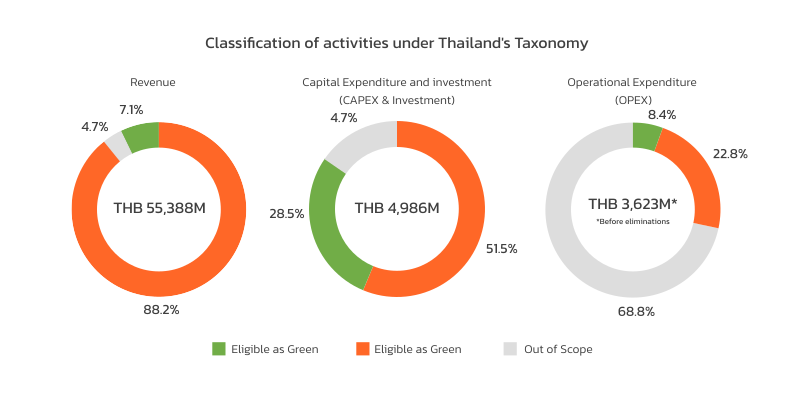
- Disclosure in Accordance with the Thailand Taxonomy, B.Grimm Power voluntarily discloses information in accordance with the Thailand Taxonomy, a framework that classifies economic activities based on their contribution to climate change mitigation and adaptation, categorising them into (1) environmentally sustainable activities (green), (2) transition activities with potential for improvement (amber), and (3) activities that are not environmentally sustainable (red), alongside environmental criteria and social responsibility criteria under the Do No Significant Harm (DNSH) and Minimum Social Safeguards (MSS). In 2025, capital expenditure and investment (CAPEX & Investment) with green activities accounted for 51.1 percent of total investment, reflecting our strong commitment to clean energy technologies that will gradually commence operation in the future. The proportion of revenue and operating expenditure (OPEX) related to green activities were at 7.1 percent and 8.4 percent respectively, reflecting our long-standing industrial power plant operations spanning over 20 years. Further details are available in the B.Grimm Power Thailand Taxonomy Disclosure.
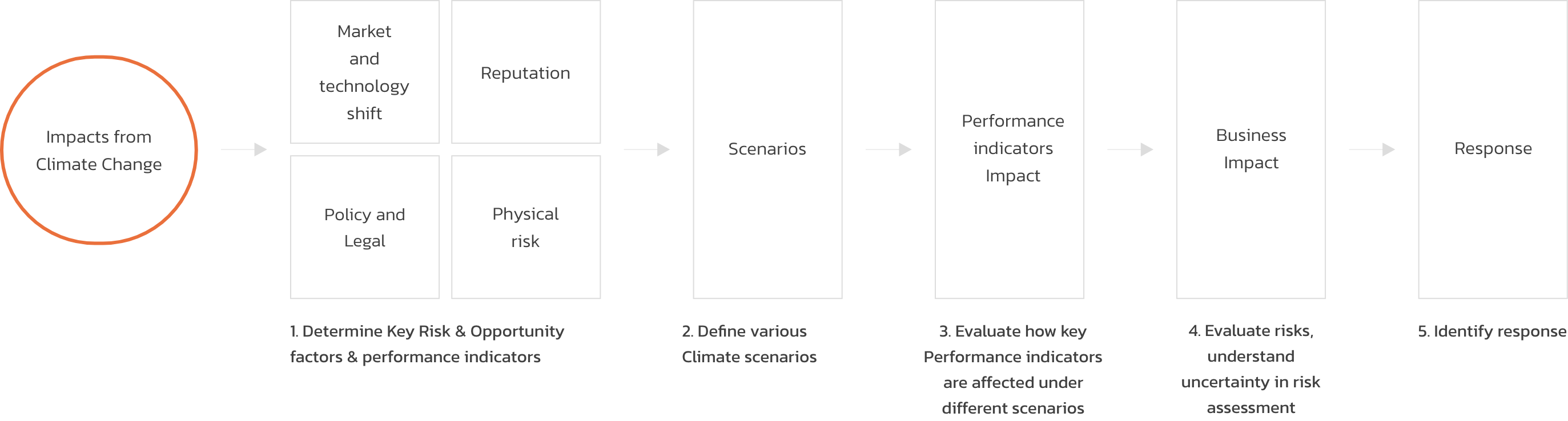
B.Grimm Power places great importance on the systematic identification, assessment, and management of climate-related risks by fully integrating them into the company’s enterprise risk management process. This approach covers multiple dimensions, including strategy, finance, leadership, stakeholder value, reputation, governance, business operations, and compliance with laws and regulations. The company has established processes for managing climate-related risks and opportunities as outlined below.
Climate-related risk and opportunity management framework
Physical risks
To complete climate change-related risk information, we assess and prioritise physical climate risks that could have significant impacts on our business by analysing potential events and emerging trends through various climate scenarios. This ensures that our climate strategy is resilient and adaptable to a wide range of future developments. We identified physical risks based on the locations of our power plants and offices, and are managed through a 4-step process:
1. Scenario analysis of potential climate change outcomes
2. Clear identification of potential impacts on business and operations.
3. Evaluate business impacts & Financial impacts assessment.
4. Development of risk management plans for identified risks.
The evaluation of risks for every power plant is based on the assumption that the climate change is extremely intense, leading to the state of water stress, which impacts electricity generation. Our power plants are equipped with the water management measures to alleviate such risk, with the target to reduce water consumption and enhance the effectiveness of utilising water in production.
Transitional risks
Transitional risks refers to the risk arising from the shift towards a low-carbon economy and power generation system, which may entail an impact on B.Grimm Power’s financial position. These risks may stem from various factors, including government policies, environmental regulations, technological advancements, consumer behaviour, stakeholder expectations, and changes in energy markets. The Risk Management Department, in collaboration with the Sustainability and Climate Management Department have identified all transitional risks, scope of impact and period of the transition, by selecting potential risks as well as business opportunities that can have positive impact on B.Grimm Power’s business operations, consisting of:
- Carbon pricing mechanisms, including carbon taxes and emissions trading systems (ETS)
- Regulations affecting electricity trading from fossil fuel–based generation, including liberalised electricity markets.
- Regulations impacting fossil fuel-based electricity and stricter greenhouse gas reporting requirements
- Costs associated with the transition to lower-emissions technologies
- Changing customer behaviours
- Changes in the reputation among investors and stakeholders
The data is analysed across multiple trends and scenarios, taking into account of 3 dimensions; the timeframe of the transition, the target to limit global warming, and the direction of national and sectoral policies and regulations.
Identification of time horizons for climate-related risks and opportunities
B.Grimm Power has considered the climate-related risks and opportunities that may impact the company’s performance and operations over the short term (2025–2026), medium term (2027–2030), and long term (2031–2050). The timeframe is regularly reviewed and updated to align with the evolving business context and changing environmental conditions. This assessment process spans the entire company value chain—from upstream activities, such as raw material input costs, to downstream activities and/or customers, including changes in customer behaviour towards a low-carbon society.
Results of the assessment identifying climate-related risks and opportunities
Given that B.Grimm Power’s primary source of revenue derives from electricity sales under long-term power purchase agreements, we place strong emphasis on managing risks over the short- to medium-term horizon. In contrast, our long-term focus is on identifying and developing new business opportunities. We have studied the climate change impact on our business, with reference to the data sources both in Thailand and overseas, in order to prepare appropriate and effective measures to respond to global climate trends that may affects the electricity generation sector. Key information sources of data are from the Task Force on Climate-related Financial Disclosures (TCFD), especially from the meeting on “disclosure of information during transitional period for the financial information disclosure and new business opportunities for the electricity industry, production and public utility. Moreover, we have incorporated suggestions from different experts to analyse and consider in terms of risks and business opportunities directly related to the business and operations that may significantly affect the operating results and operations of different types of power plants in our portfolio.
Following our assessment, we have identified three key groups of climate-related issues; 5 dimensions of physical risks, 6 dimensions of transition risks and 5 dimensions of business opportunities, which are likely to emerge during the short-term to medium-term period (2025–2030).
Key Climate-related risk & opportunity items
| Physical risks | |
| Acute | Chronic |
|
Medium-Long term time horizon P1 Flooding P2 Typhoons |
Medium-Long term time horizon P3 Rising Sea Levels P4 Extreme Heat P5 Water Stress |
| Transitional risks | |
| Policy and Legal | Technology |
|
Medium-Long term time horizon T1 Carbon Cost (tax/allowance) T2 Regulations that affect electricity trading from fossil fuels and stricter greenhouse gas reports. |
Medium-Long term time horizon T3 Costs to transition to lower emissions technology |
| Market | Reputation |
|
Medium-Long term time horizon T4 Increased costs of raw materials (Natural gas/LNG) T5 Changing customer behavior towards net-zero |
Medium-Long term time horizon T6 Change in reputation amongst investors and stakeholders |
| Opportunities | |
| Resource Efficiency | Energy Source |
|
All time horizon O1 Increased Energy Efficiency |
Medium-Long term time horizon O2 Shift towards decentralized energy generation O3 Revenue from selling renewable energy |
| Product and Services | Markets |
|
Medium-Long term time horizon O4 Expand Business to low emission products |
Medium-Long term time horizon O5 Access to new markets |
Establishing risk management indicators
Following the identification of climate-related risks and business opportunities, we conducted workshops with relevant departments and climate change consultants to jointly assess the potential impacts of each risk and opportunity on our business and financial performance. These assessments were carried out under a range of scenarios defined by the company. This evaluation serves as a critical foundation for establishing key performance indicators and effective approaches for managing climate-related risks and opportunities. The key risks and opportunities are summarised in the below table:
Key performance indicators of climate risks and opportunities
| Item | Rationales | Performance Indicators |
|---|---|---|
P5. Water stress or water shortage |
Water shortage may reduce B.Grimm Power’s operating performance (Baht per year) due to reduced production of electricity and steam from combined cycle co-generation power plants that consume water as major raw materials. |
|
T1. Carbon price risk |
Operating costs increase from tax resulting from identification of carbon price and carbon emission rights for businesses in Thailand. However, the power purchase agreement currently does not cover such costs. |
|
O3. Opportunities in selling green products and services such as electricity generation credit from renewable energy (I-RECs) |
Revenue from electricity generation credit trading from renewable sources (I-RECs) to customers requiring electricity from renewable energy. |
|
Quantitative assessment of climate-related risks and opportunities
B.Grimm Power conducts quantitative assessments of material climate-related risks and business opportunities to identify and estimate potential financial impacts. This is based on key performance indicators and their projected effects on operations and business performance under various climate scenarios. The assessment takes into account several key factors, including:
- Global temperature reduction targets in line with the Intergovernmental Panel on Climate Change (IPCC), which correspond to the Shared Socioeconomic Pathways (SSPs). These scenarios reflect global development trends under different societal, technological, and policy contexts.
Shared Socioeconomic Pathways (SSPs1) Scenario and Its Implications for Business Strategy
| Scenario | Description | Impact on Operational Direction |
|---|---|---|
1. SSP 1-2.6 (1.5oC) Scenario |
Global temperature increases not exceeding 1.5oC in this century. | Operate the business by devising the execution plan and proceed to intensively minimise climate change impact. |
2. SSP 2-4.5 (2oC) Scenario |
Global temperature increases not exceeding 2oC in this century. | This scenario’s impact on business operations lies between scenario 1 and 3. |
3. SSP 5-8.5 (4.4oC) Scenario |
Global temperature increases not exceeding 4.4oC in this century. | Operate the business with no execution plan to minimise the impact on climate change. |
1SSPs: Shared Socioeconomic Pathways are a set of global scenarios used to explore how different social, economic, and technological trends may shape the future of the world — especially in relation to climate change impacts, adaptation, and mitigation.
- Scenarios based on global policy frameworks and targets With reference to the report of the International Energy Agency, scenarios from the criteria and targets of the global community induce transitional risks that have both positive and negative impact on B.Grimm Power, for instance, the pressure from stakeholders demanding the business to shift towards low-carbon and environment-friendly businesses, leading to lower profitability from existing businesses, despite an increase in revenue from renewable energy business and electricity generation credit trading from renewable energy. The scenarios used in our analysis include:
- Stated Policies Scenario – (STEPS) is the policy announced by different countries that reflect the global intention in the actual demand for energy consumption in each period in the future.
- Announced Pledges Scenario – (APS) assumes full and timely implementation of all climate-related pledges made by governments and industries worldwide, including nationally determined contributions (NDCs).
- Net-Zero Emission Scenario – (NZE) represents a pathway in which global net greenhouse gas emissions reach zero by 2050.
Based on the analysis and assumptions drawn from the above scenarios and targets, we are able to quantitatively assess the potential impacts on our business operations, specifically in terms of revenue, costs, and financial opportunities, using clear and measurable indicators for effective risk and opportunity management. These quantitative impacts, derived from multi-scenario analysis, are summarised in the following exhibits:
Quantitative impacts of key indicators under various climate scenarios
| Physical Risks | SSP 5-8.5 (4.4°C) Scenario | SSP 2-4.5 (2°C) Scenario | SSP 1-2.6 (1.5°C) Scenario |
|---|---|---|---|
Water stress for combined cycle co-generation power plants |
Steam turbines stop operating for 15 days at a time 1 | Steam turbines stop operating for 7.5 days at a time1 | Steam turbines stop operating for 5 days at a time1 |
| Transitional Risks | STEPS (2.3°C) | APS (1.65°C) | NZE (1.5°C) |
|---|---|---|---|
Carbon tax3 |
62 USD/tCO2e | 113 USD/tCO2e | 414 USD/tCO2e |
Revenue from selling products and services certified of the electricity generation from renewable energy sources (I-RECs). |
3.5 USD/MWh | 5.5 USD/MWh | 10 USD/MWh |
1 Occur in some locations, based on the assumption that water stress events will occur every 5 years.
2 Thailand has announced plans to introduce a carbon tax of THB 200 per tonne of carbon dioxide equivalent (approximately USD 6 per tonne of carbon dioxide equivalent).
3 The carbon tax rate is referenced from World Bank case studies and reflects the projected carbon pricing trends in developing countries. It is set at a level that does not impose an excessive burden on industries during the initial implementation phase.
4 This is the long-term carbon price level aligned with the target of supporting Net Zero Emissions by 2050, in accordance with the IPCC framework and the Paris Agreement.
Business impacts of climate-related risks & opportunities at the year 2030
| Type | Physical risks | Transition risks | Opportunities |
|---|---|---|---|
Climate-related risks & opportunities Item |
P1. Water stress and water shortage |
T1. Carbon cost (tax) |
O3. Selling I-RECs |
Assets affected |
Combined cycle co-generation power plants | Combined cycle co-generation power plants | Solar power Wind power Hydro power |
Impact of identified risks |
Water stress can result in disruption of steam production and increase the water sourcing cost | Carbon pricing regulation may result in increased OPEX if regulatory costs cannot be passed through | Development of I-RECs projects and additional revenue from I-RECs trading |
Estimated financial implication |
THB 9.7-45.7 million1 | THB 0-320 million2 | THB 216-619 million5 |
Mitigation costs |
THB 2.4-16.6 million3 | THB 39 million4 | - |
1 Water stress poses a significant risk to B.Grimm Power's co-generation power plants. Water scarcity, depending on locations and management, can affect electricity sales, revenue, and efficiency, leading to higher gas consumption. Assuming severe droughts lasting 5 days (SSP1-2.6 scenario) and 15 days (SSP5-8.5 scenario) between 2024-2034, steam turbine operations at 3 locations could incur an EBIT loss of THB 9.7 million to THB 45.7 million per occurrence, expected once every 5 years.
2 Thailand is currently preparing to introduce a carbon tax at an initial rate of THB 200 per tonne of carbon, which is expected to be converted from the existing fuel tax. This approach is designed to have no impact on end consumers. However, if a carbon tax on gas usage is introduced in the future, we assess that it is highly likely to be imposed upstream on producers. In such a case, the cost may be passed through to gas prices and could eventually affect consumers. We have evaluated the potential financial impact in a scenario where a carbon tax of THB 200 per tonne of carbon is applied to gas usage. Under the assumption that the full cost can be passed on to the Electricity Generating Authority of Thailand (EGAT), we modelled different pass-through rates to end consumers ranging from 0 to 100 percent. The estimated impact on B.Grimm Power’s profit ranges from 0 to THB 320 million.
3 B.Grimm Power’s mitigation plan is to hire water trucks or purchase power from the grid, which might cost around THB 2.4 million to THB 16.6 million per event 4B.Grimm Power has conducted studies on blending hydrogen with natural gas to reduce CO2 emissions. The pilot project, which involve blending equipment and other necessary equipment, is estimated to cost THB 39 million.
4 B.Grimm Power has conducted studies on blending hydrogen with natural gas to reduce CO2 emissions. The pilot project, which involve blending equipment and other necessary equipment, is estimated to cost THB 39 million.
5 B.Grimm Power’s target is to expand renewable generation to over 50 percent of total capacity by 2030. Assuming we can generate I-RECs revenue from half of this capacity and considering an estimated price range of I-RECs at 3.5 to 10 USD/MWh under three climate scenarios (STEPS, APS, and NZE), this would equate to THB 216 million to THB 619 million in revenue per annum from I-RECs. The estimated annual expense associated with I-RECs opportunity is currently THB 2.12 million.
Adaptation Plan to climate change risks
Water shortages in power plant areas are considered a significant physical risk for B.Grimm Power’s business. Hence, all power plants are required to closely monitor the water quantity data in the area from the Hydro Informatics Institute (Public Organisation) and local organisations. Each plant must also prepare emergency response plans and business continuity plans to address such situations. Key management measures include specifying the company’s right to claim compensation from water suppliers under water purchase agreements in cases of substandard water quality; maintaining a list of backup water suppliers who can deliver water during times of crisis; improving the efficiency of the cooling water management system for cooling towers; recycling water separated from the sedimentation process for reuse in production; and developing operational manuals that include action plans for water scarcity situations.
In addition to managing physical climate risks, B.Grimm Power places strong emphasis on developing adaptation plans to address transition risks, which may arise from evolving climate policies, carbon pricing mechanisms, and future changes in energy market structures. In this regard, B.Grimm Power has implemented a pilot project on the Net Zero Roadmap and Strategy for Industrial Estates in 2 locations where its power plants are situated. Beyond conducting climate risk assessments, evaluating baseline conditions and energy supply requirements for the industrial sector, and developing greenhouse gas reduction strategies for power plants, the scope of the study has been expanded to include decarbonisation planning and strategies for the entire industrial estates. This approach aligns with B.Grimm Power’s leadership role in driving greenhouse gas emissions reduction across the value chain.
At the same time, we have developed a Technology Transition Roadmap to support greenhouse gas emissions reduction across the short, medium, and long term. The roadmap covers the study, development, and application of key technologies, including increasing the share of renewable energy and energy storage systems, hydrogen blending in fuel, the use of hydrogen or ammonia as alternative fuels, as well as carbon capture and storage technologies. Investment decisions and the scaling of each technology will be considered alongside key external factors, such as the progress of carbon tax policies and the liberalisation of electricity markets, to ensure that B.Grimm Power’s transition remains flexible, aligned with the evolving energy landscape, and capable of maintaining long-term competitiveness.
This approach enables B.Grimm Power to systematically manage transition risks while capturing opportunities arising from clean energy technologies and emerging business models that support the organisation’s Net Zero emissions ambition.
Stakeholder engagement and collaboration to support the transition to a low-carbon society
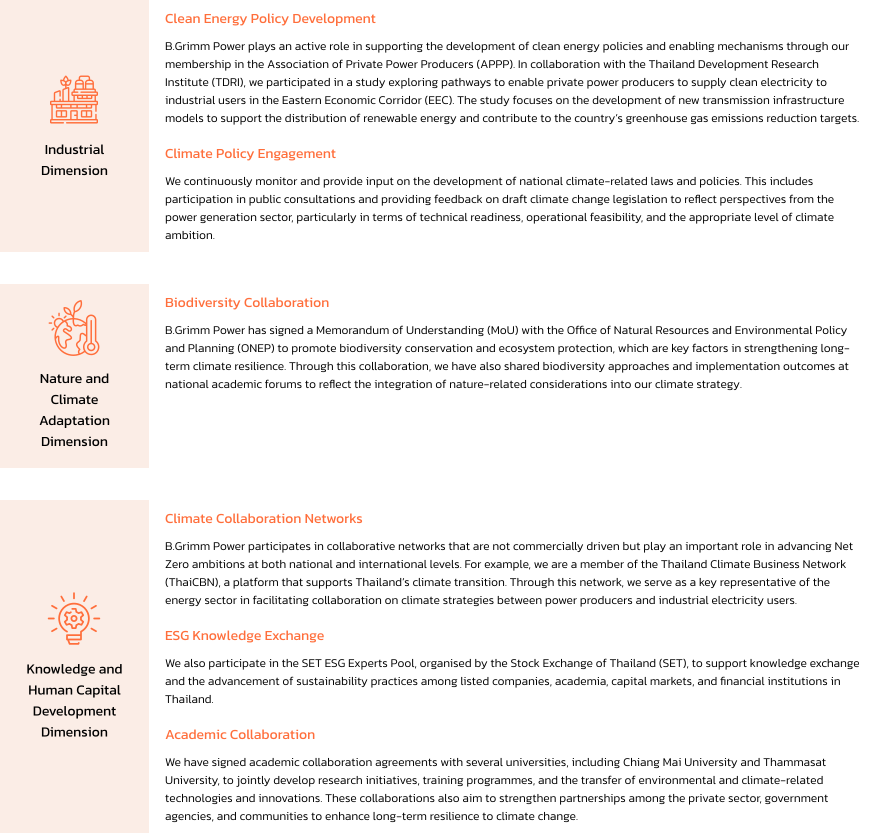
B.Grimm Power places strong emphasis on engagement and collaboration with external stakeholders at multiple levels to support the transition to a low-carbon society, alongside the implementation of our climate strategy. We have established a systematic process to review and monitor activities related to public policy and policy engagement, ensuring that such actions remain aligned with our climate commitments and the Paris Agreement. All relevant activities are assessed for alignment with our Net Zero objectives prior to implementation. The outcomes are subsequently reviewed by the Corporate Climate Taskforce and reported to the Management Committee. Details of our engagement and collaboration with external stakeholders are outlined below.
Performance 2025
Greenhouse Gas Emission Intensity
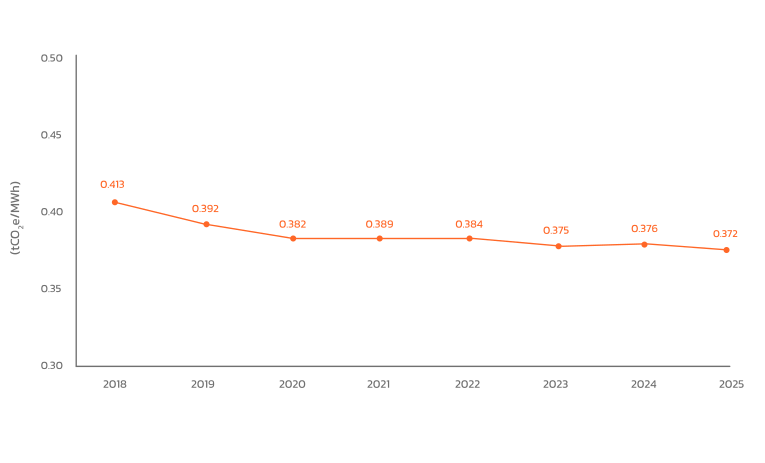
In 2025, B.Grimm Power's GHG intensity for scope 1 and 2 was 0.372 tonnes of carbon dioxide equivalent per megawatt-hour (tCO2e/MWh), representing 10 percent reduction from 2018. The key achievements include:
- Continuous Expansion of Renewable Energy In 2025, B.Grimm Power announced additional investments in renewable power projects totalling 166 MW across Thailand, Japan, and the Republic of the Philippines. As of the end of 2025, our total committed power generation portfolio reached 3,179 MW, which includes 1,315 MW from operational projects and 1,864 MW from projects under construction and development.
- Energy Efficiency Enhancements B.Grimm Power continues to optimise energy and fuel consumption, implementing advanced energy management practices and upgrading equipment across its operations. Key initiatives include energy-efficient operation of cooling towers, optimisation of steam trap systems, installation of Variable Speed Drive (VSD) motors, and adjustments to the testing schedule of Emergency Diesel Generators (EDG) without affecting equipment readiness. Additional measures include replacing air filters to improve airflow into gas turbines and increasing the fuel temperature before entering the gas turbine by utilising waste heat to preheat natural gas through a High Pressure Economiser. This process improves combustion efficiency and enables a reduction in natural gas consumption of up to 250
million MJ
per year, equivalent to a cost saving of more than THB 76.7 million. In addition to enhancing operational flexibility and reducing natural gas consumption, these measures contribute to a reduction of approximately 14,000 tCO₂e per year. Furthermore, in 2025, we have 1 power plant upgraded its gas turbine capacity from 50.5 MW to 54 MW, resulting in an improvement in equipment efficiency by 39 Btu per kWh, reducing natural gas consumption by 22,321,626 MJ per year, equivalent to approximately 832 tCO₂e per year of avoided emissions. - Waste Reduction and Resource Optimisation Across the Supply Chain B.Grimm Power enhanced waste reduction efforts in line with Zero Waste to Landfill principles by promoting waste management from source to disposal. Key initiatives include Recycling and waste-to-energy solutions, utilising waste as an alternative fuel source, and Repurposing materials for extended use. These efforts have diverted over 96 tonnes of hazardous waste from landfills in 2025. Additionally, the company has expanded its wastewater sludge repurposing program, using sludge from water treatment systems as soil conditioners, repurposing used gas turbine air filters into plant pots for tree planting to minimise environmental impact and enhance waste value. Expired solar panels from photovoltaic solar power plants are also repurposed for lighting systems and internal electrical equipment, maximising resource efficiency and minimising waste across the product lifecycle.
- Digital Innovation for Smart Energy Management B.Grimm Power is developing digital systems and data management platforms to enhance energy efficiency, operational performance, and business resilience. Key technology initiatives include the Energy Management System (EMS) and Digital Twin technology, which help optimise operations and mitigate risks. Additionally, B.Grimm Power is advancing a Virtual Power Purchase Agreement (Virtual PPA) platform and is fully operational, aligned with Third-Party Access (TPA) regulations, to facilitate expanded clean energy trading opportunities.
- Enhancing Grid Reliability and Efficiency B.Grimm Power is undertaking 2 key initiatives in collaboration with Hitachi Energy, to enhance our grid infrastructure and operational efficiency. The Relay Expansion project involves upgrading substation protection systems to safely accommodate varied renewable energy sources, while the Optimisation of Remote Substations initiative leverages digitalisation and automation to improve the management of our remote high-voltage facilities. The initial implementation at our ABPR power plant is already demonstrating significant results, achieving natural gas savings of over 500,000 THB, monthly reducing carbon emissions by 82.5 tCO2e, and improving the average heat rate by approximately 8 BTU per kWh.
In addition to core operational initiatives that deliver quantifiable greenhouse gas emissions reductions, B.Grimm Power has also initiated pilot projects and exploratory studies to prepare for long-term decarbonisation. These initiatives are currently in the stages of study, testing, and development of implementation models. As such, their potential emissions reductions have not yet been included in the Company’s reported greenhouse gas reduction results for the reporting year. Nevertheless, these initiatives play an important role in building knowledge, strengthening organisational capabilities, and creating opportunities to scale up future greenhouse gas emissions reduction efforts. These initiatives include the following initiatives:
- Biochar Pathway for Transforming Waste into Value B.Grimm Power, in collaboration with Chiang Mai University under the Sustainability Beyond Net Zero Program, is studying the conversion of biomass sludge from operational processes into biochar through thermal conversion. The study covers the design of small-to medium-scale biochar production systems that can potentially be applied in power plants or local communities. Pilot applications are being tested in agricultural areas in collaboration with farmer groups to assess the potential for improving soil quality, enhancing agricultural productivity, and increasing carbon sequestration in soils. Currently, B.Grimm Power generates approximately 1,200 tonnes of biomass sludge per year from 8 power plants, which has the potential to be utilised as feedstock for biochar production and further support circular economy practices in the future. The project also emphasises knowledge sharing with local communities through educational activities on biochar for schools, communities, and local authorities, promoting sustainable resource management.
- Blue Carbon: Mangrove Project at Bangbo B.Grimm Power has implemented mangrove restoration and planting activities at the ground-mounted solar power plant site in Bang Bo District, Samut Prakan Province. The initiative supports natural carbon sequestration while conserving coastal ecosystems and strengthening resilience to climate change. A total of 100 mangrove trees have been planted, which are expected to sequester approximately 13.76 tCO₂e. Mangroves have significantly higher greenhouse gas absorption potential compared with typical terrestrial trees, with the sequestration potential equivalent to planting approximately 650 conventional trees.
Further details on GHG reduction initiatives through power generation efficiency improvements can be found in Environmental and Resource Management the Operational Excellence and Customer Relationship Management topic, and details on the new technology adoption for greenhouse gas reduction can be found in the Innovation and Digitalisation topic.
In response to water shortage risks driven by climate change, we have implemented operational improvements to enhance water efficiency and resilience, including:
- Water reduction and efficiency initiatives, such as upgrading cooling systems to utilise treated wastewater and minimise evaporation losses, recycling wastewater from production processes for cooling, preliminary water treatment systems, and rainwater harvesting from drainage systems for reuse. These measures have reduced water consumption by 447,000 cubic meters per year, equivalent to a reduction of approximately 40 tCO₂e per year associated with the use of municipal water supply.
- Continuous water monitoring and risk assessment, conducted in collaboration with government agencies providers and private water providers. This ensures real-time data access, risk evaluation, and efficient water resource management to minimise impacts on power generation and mitigate potential disruptions for industrial customers.
Further details on water reduction initiatives to address water scarcity risks can be found in the Environmental and Resource Management topic.