

Why is it important
The use of natural resources underpins the global economy; however, the rapidly increasing demand for resources is contributing to climate change, biodiversity loss, and risks to human health. Without changes in current consumption patterns, global resource use could double by 2060, posing significant risks to the environment, social equity, and public health. Nevertheless, important opportunities exist for businesses to operate more sustainably by shifting towards decoupling economic growth from resource use. This can be achieved through more efficient resource management, the advancement of a circular economy, and the promotion of sustainable production and consumption policies. Such approaches can reduce environmental impacts while maintaining economic growth. Sustainable resource management therefore represents both a challenge and an opportunity to strengthen economic competitiveness, promote social equity, and contribute to the achievement of the Sustainable Development Goals.
At B.Grimm Power, we are committed to managing environmental resources responsibly and efficiently to conserve natural resources and minimise environmental impacts. We continuously enhance and optimise our power generation processes to achieve maximum efficiency by applying circular economy principles. This includes selecting high-efficiency and environmentally friendly machinery and equipment for our power plants, choosing fuels that have lower negative environmental impacts, and maintaining and upgrading equipment to ensure optimal power generation performance while continually reducing environmental impacts. In addition, we conduct Life Cycle Assessments (LCA) to ensure that equipment is utilised as efficiently as possible throughout its lifecycle. At the same time, we continue to invest in renewable energy projects and actively collaborate with stakeholders to support the conservation of natural resources and the environment, promoting tangible actions to reduce, mitigate, and restore environmental impacts.
Target and Performance
| Performance 2025 |
Target 2025-2029 |
Target 2030 |
|
|---|---|---|---|
| Percentage of waste recycled to total waste generated | 86.8% | >82% | 88% |
| Percentage of power plants complied with laws and regulations related to wastewater discharge to total power plants | 100% | 100% | 100% |
| Percentage of power plants complied with laws and regulations related to air emissions to total power plants | 100% | 100% | 100% |
Management Approach and Strategy
Policy and Commitment
B.Grimm Power has established an Occupational Health, Safety and Environment Policy (OHS&E) Policy to demonstrate its commitment to conducting business responsibly and with due regard for environmental stewardship. This commitment is reflected through the adoption of best-available, high-efficiency technologies, the use of fuels with lower environmental impacts, and the implementation of systematic measures to control and reduce air emissions, waste, and noise pollution. We also conduct regular monitoring and inspections within our power plants and surrounding communities to prevent, mitigate, and minimise potential adverse impacts on communities, the environment, and other relevant stakeholders arising from our business operations.
Governance Structure
B.Grimm Power has established the governance structure of Occupation Health, Safety and Environment (OHS&E) to ensure effective implementation of the OHS&E policy and to promote continuous improvement through regular reviews. It is the responsibility of all employees, at all levels, to comply with and implement this policy, under the supervision of key relevant management as outlined below:
- Board of Directors (BoD) is responsible for overseeing and approving policies, setting strategic direction, and reviewing the effectiveness of the Occupational Health, Safety, and Environment (OHS&E) management system annually.
- Corporate Occupational Health, Safety and Environment (OHS&E) Committee comprising members of the Management Committee and representatives from the OHS&E Working Team, this committee is responsible for developing policies and strategies, overseeing, and regularly monitoring OHS&E performance to ensure alignment with the organisation’s goals and direction.
- Occupational Health, Safety and Environment (OHS&E) Working Team consisting of senior management representatives and professional safety officers from both the Bangkok office and power plants, the team is responsible for supervising, monitoring, reporting, and setting operational guidelines on workplace safety, environment, biodiversity conservation, and forest resource protection in compliance with relevant laws and company policies. Monthly meetings are held to communicate policies, engage with key internal and external stakeholders, exchange perspectives, and share initiatives for improving the OHS&E management system. The team also promotes collaboration and awareness among employees, contractors, business partners, regulatory bodies, and other relevant stakeholders.
Further information can be found in The Occupational Health, Safety and Environment Policy.
Integrated Environmental Management
Environmental Management in accordance with International Standards
B.Grimm Power is committed to conducting its business with strong consideration for environmental conservation through a systematic and integrated management approach. This approach covers the establishment of internationally aligned frameworks, impact assessment, risk management, as well as monitoring and continuous improvement. We have established an environmental management framework aligned with international standards, covering the entire organisation, including subsidiaries, suppliers, and contractors under our operational control. This approach is implemented in compliance with relevant national and international laws, regulations, and standards. B.Grimm Power adopts an Environmental Management System (EMS) based on ISO 14001:2015 as the primary framework to oversee and enhance the environmental performance of our power plants. Power plants that have obtained certification strictly comply with the standard’s requirements, while those preparing for certification undergo internal audits or engage external auditors to assess performance and implement improvements prior to entering the formal certification process.
Furthermore, power plant projects located within industrial estates operate in line with eco-industrial principles and have been certified under the Eco Factory Standard, established by the Ministry of Industry. The standard promotes environmentally and socially responsible operations, encompassing efficient resource utilisation, mitigation of environmental impacts, and harmonious coexistence with surrounding communities. This reflects the Company’s continued efforts to strengthen environmental management practices while delivering long-term value for all stakeholders.
Environmental Impact Assessment in Compliance with Legal Requirements
All power plants undertake comprehensive environmental studies and assessments. These evaluations consider potential impacts on natural resources, the economy, society, and community health to establish appropriate prevention and mitigation measures, as well as corrective actions and monitoring programmes. Environmental management action plans are also developed for both the construction and operational phases. For projects subject to regulatory requirements, B.Grimm Power prepares an Environmental Impact Assessment (EIA). For projects that are not required to undertake an EIA, we determine and prepare environmental assessments at an appropriate level, based on the nature and risk profile of each project. These include, but are not limited to, the Initial Environmental Examination (IEE), the Environmental Safety Assessment (ESA), and the Code of Practice (CoP) to ensure that environmental and safety considerations are properly addressed. In addition, we continuously monitor and oversee environmental impacts arising from power plant operations. Preventive and corrective measures are implemented alongside environmental quality monitoring programmes. The results of these activities are compiled and reported every 6 months to the Energy Regulatory Commission (ERC) and other relevant authorities.
Environmental Risk Management, Auditing, and Performance Improvement
B.Grimm Power continuously monitors and analyses environmental performance by developing comprehensive and standardised environmental indicator databases across all power plants. Strategic targets and key performance indicators are established at both project and corporate levels to guide effective planning and operational management. These efforts focus on reducing environmental impacts and promoting efficient resource utilisation. Performance results are regularly reviewed, and operational processes are continuously improved to enhance environmental performance.
In addition, B.Grimm Power utilises the Essential ERM platform to effectively identify, assess, and monitor risks. The platform centralises information on both existing and emerging risks, together with mitigation measures from all power plant units and the corporate headquarters. Risk information is presented through real-time dashboards, providing a comprehensive overview of organisational risk exposure. Examples of environmental risks assessed include natural disasters, raw water quality, potential leakage of hazardous waste or wastewater, and cost risks associated with rising natural gas prices.
B.Grimm Power also conducts regular internal audits on occupational health, safety, and environmental management. The Occupational Health, Safety, and Environment (OHS&E) function evaluates compliance with applicable legal requirements and international standards, including ISO 14001:2015 and ISO 45001:2018, as well as general environmental and safety practices. These include hazardous and non-hazardous waste management and segregation, proper waste disposal in accordance with legal requirements, and the promotion of environmental and safety awareness in the workplace. Audit findings are documented in reports that clearly identify areas requiring improvement, together with practical and actionable recommendations for corrective measures.
Circular Economy Application
B.Grimm Power recognises the limitations of the linear economy, which is based on the model of take–make–dispose. This approach emphasises resource extraction for production and consumption before disposal, resulting in significant waste generation and unsustainable depletion of natural resources. In response, B.Grimm Power integrates the principles of the circular economy into its operations by focusing on the design of production systems and waste management processes that optimise resource efficiency throughout the value chain. Our approach promotes the reuse and reintegration of resources back into the production cycle (make–use–return), while minimising emissions and waste. This aligns with the 3Rs principles — Reduce, Reuse, and Recycle — as well as the concept of Industrial Symbiosis (IS), which encourages the exchange of waste materials and by-products between industries. Such collaboration helps reduce resource loss, minimise waste generation, and mitigate long-term environmental impacts. B.Grimm Power incorporates circular economy principles into both planning and operational practices. Key initiatives include increasing the share of renewable energy, reducing the use of virgin materials, extending the lifespan of equipment, and recovering waste for beneficial reuse. We also explore collaborative opportunities to enhance resource efficiency, such as developing alternative fuels to replace natural gas in combined heat and power plants and investing in energy storage systems.
Energy Management
B.Grimm Power operates thermal power generation using natural gas as the primary fuel. We place strong emphasis on the maintenance and continuous improvement of machinery to maximise efficiency, reduce fuel consumption, and optimise the utilisation of thermal energy. These efforts also contribute to enhancing overall power generation capacity. In terms of energy management, B.Grimm Power focuses on the efficient use of energy and the adoption of advanced technologies from leading global manufacturers. We also prepare an annual energy management report, which is reviewed and certified by an accredited energy auditor. This report covers key energy management processes as follows:
- Establishing an Energy Management Working Committee to develop energy management plans and preventive maintenance strategies.
- Conducting a preliminary energy management assessment to determine the level of energy management at each power plant, considering energy conservation policies, roles and responsibilities, awareness programmes, information management systems, communication activities, and investments in energy conservation initiatives.
- Establishing an energy conservation policy to demonstrate our commitment to energy conservation efforts.
- Assessing energy-saving potential through detailed analysis of energy consumption across 3 levels: organisation, product, and equipment.
- Setting energy conservation targets and plans at both the power plant and corporate levels, along with related training programmes and awareness activities.
- Implementing the energy conservation plan including performance monitoring and analysing aligned with the established goals.
- Conducting energy management audits.
- Reviewing, analysing, and identifying improvement opportunities to enhance energy management performance.
In addition, B.Grimm Power continuously promotes energy conservation awareness through training programmes and awareness campaigns. These initiatives include courses for senior energy management personnel, office energy-saving programmes, and annual energy awareness activities. Such efforts aim to encourage continuous improvement and the development of innovations that help reduce energy consumption and promote energy recovery and reuse. These initiatives also contribute to lowering operational costs while strengthening the organisation’s long-term sustainability.
Performance 2025
In 2025, our non-renewable energy consumption decreased by 72,685 MWh, or 0.4 percent compared with the previous year. This reduction was primarily attributable to improved operational control, maintaining an optimal heat rate, and the gas turbine upgrade at the BPWHA1 power plant, which enhanced overall power generation efficiency. Nevertheless, the intensity of non-renewable energy consumption per unit of electricity generated remained stable at 1.2, comparable to the previous year, reflecting our continued ability to maintain efficient power generation performance.
In this regard, B.Grimm Power has continuously implemented energy efficiency improvement initiatives, resulting in a total reduction in energy consumption of more than 75,600 MWh, equivalent to approximately THB 84 million in energy cost savings. These outcomes reflect our strong commitment to enhancing operational efficiency and reducing long-term reliance on non-renewable energy sources.
| Unit | 2022 | 2023 | 2024 | 2025 | |
|---|---|---|---|---|---|
| Total non-renewable energy consumption | MWh | 15,936,053 | 15,626,496 | 16,801,791 | 16,729,106 |
| Total renewable energy consumption | MWh | 70 | 160 | 156 | 147 |
Outstanding Energy Efficiency Projects

Reduction Power and Fuel Consumption in Machinery Operations
We are committed to continuously improving machinery and equipment efficiency to reduce electricity consumption. Key energy efficiency enhancement projects includes:
- Cooling Tower System: Enhanced cooling tower system efficiency by optimising cooling tower fan operations during low-load periods and adjusting operating modes to match actual heat dissipation requirements. In addition, optimise the operation of make-up water pumps for the cooling towers to reduce electricity consumption.
- Gas Turbine System: Optimised the operation of cooling fans by shutting them down when the gas turbine is under shutdown conditions, without causing damage to the machinery, at the ABP1–2 Power Plants.
- Steam Turbine and Steam Pipeline System: Reduced the operating time of the pump system during shutdown and steam trap replacement to minimise steam losses.
- Compressed Air System: Installed smaller air compressors equipped with Variable Speed Drives (VSD) to enhance operational flexibility in line with power generation activities and improve energy efficiency at the ABPR3–4 Power Plants.
- Installation of a Fuel Gas Heating System (Gas Heater) at Power Plants: increasing the temperature of fuel gas before entering the gas turbine by utilising heat recovered from the High Pressure Economiser (HP ECO). This system captures waste heat to raise the fuel gas temperature and improve combustion efficiency, resulting in a reduction of natural gas consumption of approximately 250 million MJ per year.
- Gas Turbine Upgrade at The BPWHA1 Power Plant: increasing generation capacity from 50.5 MW to 54 MW, while significantly reducing natural gas consumption and improving overall power generation efficiency by 39 BTU per kWh.
- Shutdown of Gas Compressors during Off-Peak Electricity Demand Periods: reducing the electricity consumption of gas compressor motors. However, stopping or switching compressor operations may generate additional noise. To address this, the BIP1 Power Plant installed a silencer to control potential noise emissions, enabling the measure to be implemented effectively. As a result, the initiative helps reduce electricity consumption by approximately 100,000 kWh per year.

Reduction of Non-Process Electricity and Fuel Consumption
Continuous monitoring of internal electricity consumption is carried out by the Energy Management Committees at each power plant to identify opportunities for improving efficiency and reducing energy use. In 2025, initiatives were implemented to reduce electricity consumption in utility systems, such as raw water quality improvement, as well as in office operations, including:
- Raw Water and Wastewater Treatment Systems: The raw water pipeline was restructured to shorten transmission distance and reduce pump usage. Variable Speed Drive (VSD) systems were also installed on water pumps to enhance efficiency. In addition, degraded solar panels from our solar power plants were repurposed to power flood prevention pumping systems within the project area.
- Lighting Systems and Office Buildings: LED lighting was expanded in project areas, and motion sensor systems were installed to automate lighting based on occupancy, optimising electricity usage in offices.
Water Management
B.Grimm Power is committed to conserving and using water resources efficiently throughout the value chain while implementing appropriate wastewater management practices. We also collaborate continuously with communities and external organisations to support water conservation initiatives. Recognising the risks of drought associated with climate change, B.Grimm Power conducts water risk assessments at the watershed level to ensure that our operations do not adversely affect community access to water. In addition, we promote efficient water use in line with the 3Rs principles (Reduce–Reuse–Recycle). Key initiatives include increasing water recirculation cycles in cooling tower systems, reusing treated water to reduce raw water consumption, and regularly monitoring wastewater quality to ensure compliance with applicable standards. These measures help prevent potential negative impacts on the environment and surrounding communities.
Water Related Risks Assessment
B. Grimm Power conducts annual assessments of areas at risk of water scarcity in both the short and long term. These assessments include evaluating water stress1 risks using the AQUEDUCT Water Risk Atlas developed by the World Resources Institute (WRI). In 2025, the assessment found that 80.9 percent of projects (38 out of 47 sites2) are located in areas facing high to extremely high water scarcity risk. Water withdrawal from these locations amounted to 15.7 million cubic metres, representing 77.9 percent of total net freshwater withdrawal. They also contributed 87.4 percent of total cost of sales and services.
All combined-cycle power plants are situated in high to extremely high water-stress areas. In respone, we prioritise sustainable water management, particularly by reducing dependency on natural water sources. This is achieved through the reuse of treated wastewater from the industrial estates where the power plants are located. Furthermore, internal water recirculation is optimised, such as increasing cooling tower water recirculation cycles to maximise water use efficiency. We also actively engage stakeholders through regular meetings with industrial estate operators and surrounding communities to understand concerns, jointly develop risk mitigation strategies, and plan future water demand management. We also prepare annual water scenario planning as part of our Business Continuity Plan (BCP), to assess external water source trends and establish emergency water supply plans, ensuring uninterrupted plant operations while safeguarding community access to water.
For other types of power plants, including solar power plants and hydropower plants, 66.7 percent of these facilities are located in areas with high to extremely high water scarcity risk. However, their water withdrawal amounts to only 0.02 million cubic metres, representing 0.1 percent of total net freshwater withdrawal. Nevertheless, B.Grimm Power recognises the importance of responsible water resource management and continuously monitors potential impacts across all types of power plants. Water is not only a critical resource for operations but also a natural resource that must be conserved to ensure long-term sustainability.
Water Risk Assessment Result by AQUEDUCT Water Risk Atlas
| Type | Projects | Projects Assessed | Projects Located in High or Extremely High-Risk Areas | Key Measures |
|---|---|---|---|---|
| Office building | 1 | 1 | 1 | Promote mindful water use by conserving water in the office and ensuring taps are fully turned off after use. |
| Combined cycle co-generation power plant | 20 | 20 | 20 |
|
| Solar power plant | 19 | 19 | 16 | Control the frequency of solar panel cleaning to minimise unnecessary water consumption. |
| Hydropower plant | 4 | 4 | 1 |
|
| Wind power plant | 2 | 2 | 0 | Wind power generation involves minimal water usage, limited to activities such as cleaning turbine blades, the nacelle, and for general use in office facilities. |
| Backup for power trading | 1 | 1 | 0 | The project is small-scale and utilises low-water-use technology to enable rapid and flexible electricity supply. |
| Total | 47 | 47 | 38 |
1 Water stress: “When withdrawals are greater than 20 percent of total renewable resources, water stress often limited development opportunities; withdrawals of 40% or more represents high stress. Similarly, water stress may be a problem if a country or region has less than 1,700 m3/year of water per capita (Falkenmark and Lindh, 1976).” Source: IPCC Report 2001.
2 The scope of water stress risk assessment covers B.Grimm Power and its subsidiaries, representing 97.8 percent of total revenue. The scope of the assessment excludes rooftop solar power projects, the natural gas supply and wholesale business, and the operation and maintenance (O&M) services business, as these activities involve very low water consumption and are not considered material to water-related risks.
Water Quality Management
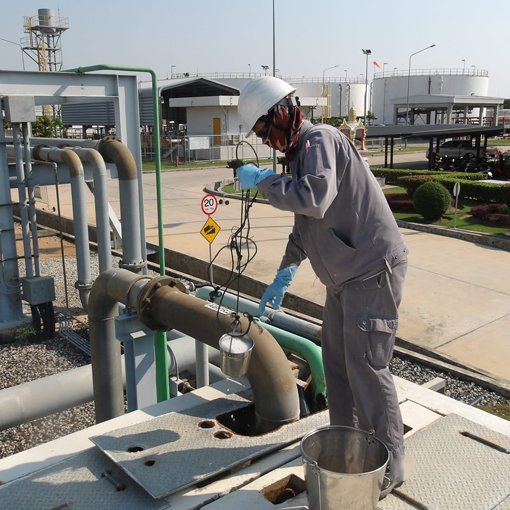
B.Grimm Power has implemented a water quality management system at its combined cycle co-generation power plants to ensure that all wastewater complies with regulatory standards before being discharged into the central treatment systems of respective industrial estates. Monthly inspections are conducted by in-house chemists specialising in water quality testing, along with external assessments. These procedures are carried out in accordance with relevant laws and regulations, such as the Environmental Quality Promotion and Conservation Act B.E. 2535, and the Industrial Estate Authority of Thailand (IEAT) wastewater discharge regulations. They are also aligned with the impact prevention and mitigation measures outlined in each project’s Environmental Impact Assessment (EIA) report. Although renewable power plants have relatively low water usage and generate minimal wastewater, water management remains a priority. The focus is to ensure that operations do not negatively affect surrounding areas. In rare cases where water diversion may occur due to natural events, rigorous monitoring and control measures are enforced to maintain compliance with local legal and environmental standards.
Although renewable power plants have relatively low water usage and generate minimal wastewater, water management remains a priority. The focus is to ensure that operations do not negatively affect surrounding areas. In rare cases where water diversion may occur due to natural events, rigorous monitoring and control measures are enforced to maintain compliance with local legal and environmental standards.
Performance 2025
In 2025, total water withdrawal increased by 267.7 million cubic metres, or 44.4 percent compared with the previous year. This increase was primarily attributable to the first-time reporting of water withdrawal from the Malacha Hydropower Plant. However, when considering net freshwater withdrawal intensity per unit of electricity generated, the figure was 1.35 cubic metres/MWh, representing a 5.6 percent improvement from the previous year and outperforming the target of a 1 percent year-on-year reduction. The result reflects continuous improvements in water management efficiency within power generation operations. Part of this improvement is attributed to the reuse of treated wastewater that meets required standards within the production process, helping to reduce freshwater withdrawal from natural sources. For wastewater management, B.Grimm Power treats wastewater in accordance with applicable standards and regulatory requirements before discharging it to the central wastewater treatment systems of the industrial estates in each operating area. Based on water quality monitoring results in 2025, no cases of wastewater discharge exceeding regulatory standards were identified.
| Unit | 2022 | 2023 | 2024 | 2025 | |
|---|---|---|---|---|---|
| Water Withdrawal | Million cubic metres | 673.4 | 598.7 | 603.5 | 871.1 |
| Water Discharged (TDS ≤ 1,000 mg/l) | Million cubic metres | 654.8 | 579.0 | 582.3 | 851.0 |
| Net Fresh Water Consumption1 | Million cubic metres | 18.5 | 19.7 | 21.2 | 20.1 |
| Net Fresh Water Consumption Intensity | Cubic metres/MWh | 1.36 | 1.42 | 1.43 | 1.35 |
1Total net freshwater consumption is calculated by subtracting the total volume of water discharged (with Total Dissolved Solids (TDS) ≤ 1,000 mg/L) from the Total water withdrawal.
Outstanding Water Efficiency Projects

Recycling wastewater from operations and capturing rainwater for reuse
Improving the system to collect rainwater from drainage channels and reuse it by storing it in the Raw Water Buffer Tank without affecting water quality or production efficiency. This initiative helps reduce raw water withdrawal from external sources and minimise wastewater generated from the production process. An example of implementation at the ABP3 Power Plant is as follows:
- Monitoring and verifying water quality, including continuous monitoring of water levels in drainage channels and testing key parameters such as pH, conductivity, and turbidity, as well as monitoring potential contaminants including phosphate, ammonia, and manganese.
- Designing and installing the supporting system, including piping from the drainage channel to the Raw Water Buffer Tank and the oil separator, as well as installing a sump pump, control panel, and butterfly valve to ensure efficient system operation.
- Implementing emergency response measures, including designing the system to allow water flow to be diverted when necessary. In the event of oil or chemical leakage, water can be immediately directed to the oil separator to prevent contamination and minimise environmental impacts.
- Monitoring performance and evaluating cost-effectiveness, including assessing the volume of rainwater that can be reused, comparing its quality with raw water, and calculating the break-even point based on actual operational results.

Improving processes and/or equipment to maximise water use efficiency
Improving the system to reuse wastewater from the MBP sampling water point in the Clarifier Water System, without affecting water quality or production efficiency. This initiative enhances water use efficiency and reduces the volume of wastewater generated from the production process. Examples of implementation include the following:
- Verifying water quality, including testing key parameters such as pH, conductivity, and turbidity. The results indicate that the water quality is better than that of raw water, allowing it to be safely reused within the system.
- Designing and installing the supporting system, including piping at the ABP3 Power Plant to route wastewater from the sampling water point through the Reverse Osmosis Tank (RO Tank) before connecting it to the existing Clarifier Water System pipeline. The system also includes the installation of a collection funnel and a water flow meter to effectively control and monitor the volume of reused water.

Collaborating with partners to promote community access to water resources.
B.Grimm Power is committed to promoting a net positive impact on biodiversity by encouraging our power plants to participate in natural resource conservation and forestation. We also support natural watershed conservation activities in collaboration with the government, private sectors and local communities.
- Sustainable watershed management, with the ABP power plant group collaborating with government agencies, local communities, and the private sector to develop a five-year master plan (2024–2028) for the sustainable management and development of Khlong Tamru.
- Restoring watershed and forest ecosystems, including supporting mangrove reforestation, community forest planting, and aquatic species release programmes to rehabilitate ecosystems and enhance biodiversity in areas surrounding the power plants. Key activities in 2025 included the following:
- The ABPR power plant group participated in the Sustainable Water Resource Conservation Project (Aquatic Species Release) in honour of His Majesty King Vajiralongkorn (Rama X). The initiative aims to conserve water resources and protect the ecosystem of Dok Krai Reservoir, located in Phana Nikhom Subdistrict, Nikhom Phatthana District, Rayong Province.
- The ABPR power plant group participated in the Green Area Expansion and Natural Resource Conservation Project (Community Forest Planting) at the Government Forest Plantation Area within the Bang Lamung National Reserved Forest, Khao Mai Kaeo Subdistrict, Bang Lamung District, Chonburi Province, where 1,000 trees were planted.
- The ABP power plant group collaborated with local authorities and communities to organise the “Mangrove Planting: Embracing the World with Blue Carbon” activity in Bang Bo District, Samut Prakan Province, where 100 mangrove seedlings were planted, along with a coastal clean-up activity along the mangrove shoreline.
- The BPLC1 Power Plant participated in mangrove planting, planting 200 mangrove trees as part of the “Let’s Zero Together: Plant for a (Low-Carbon) Sustainable Future” activity, organised by the Laem Chabang Industrial Estate Office, at the Ban Laem Chabang Community Mangrove Learning Centre, Chonburi Province.
Waste Management
B.Grimm Power recognises the importance of conducting business in line with the circular economy approach, which emphasises the efficient use of resources throughout the entire product lifecycle, including effective reuse and recycling, alongside comprehensive waste management. B.Grimm Power therefore places strong emphasis on developing waste management systems and reducing waste generation by maximising resource utilisation. This approach ensures that business operations are carried out in parallel with environmental stewardship and social responsibility towards surrounding communities, while also contributing to the reduction of greenhouse gas emissions—one of the most pressing environmental challenges today.
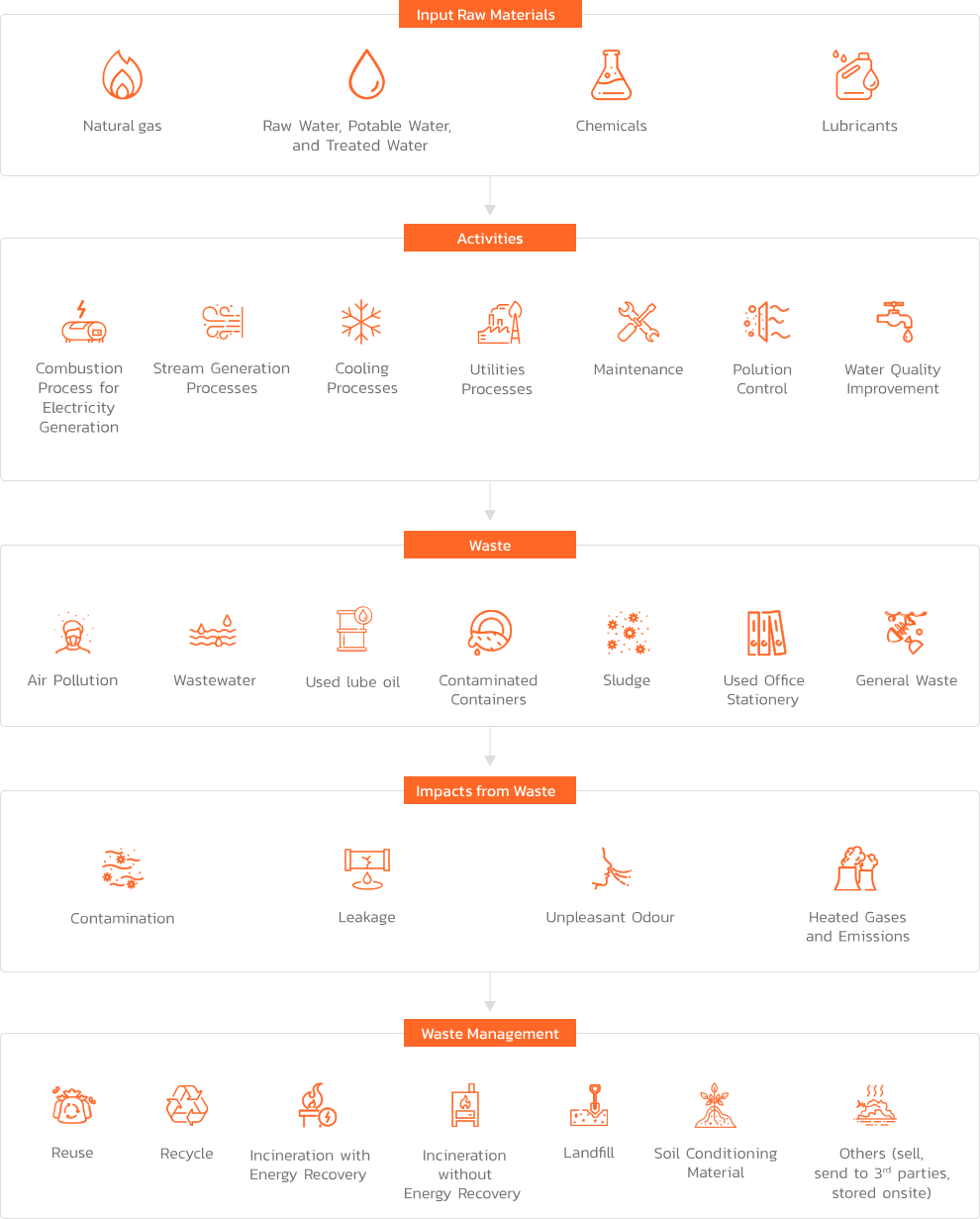
To support the implementation of the circular economy approach, B.Grimm Power is committed to managing waste generated from production processes efficiently. We aim to reduce waste generation and maximise the beneficial use of waste, minimising residual waste and progressing towards the goal of Zero Waste to Landfill. This is achieved through waste management practices aligned with the 3Rs principles (Reduce–Reuse–Recycle), which focus on reducing waste generation, reusing materials, and recycling resources for further use. In addition, we promote proper waste segregation, including general waste, organic waste, recyclable waste, and hazardous waste, to ensure resources are utilised efficiently, operational costs are reduced, and negative environmental impacts are minimised.
Waste Management
Performance 2025
Waste generated from our operations decreased by 814 tonnes, or 28.3 percent compared with the previous year, primarily due to fewer major maintenance activities at our power plants. In addition, the proportion of waste reused, recycled, or sold increased to 86.8 percent, reflecting improvements in our waste management efficiency and our commitment to reducing landfill disposal. We prioritise the selection of waste management partners with the capability to recover value from waste through recycling processes or conversion into alternative fuels. Furthermore, we have implemented a range of initiatives to enhance waste management efficiency in a tangible manner.
| Unit | 2022 | 2023 | 2024 | 2025 | |
|---|---|---|---|---|---|
| Total Waste Generated | Metric tonnes | 2,426 | 2,808 | 2,875 | 2,061 |
| Hazardous Waste | Metric tonnes | 211 | 673 | 512 | 330 |
| Non-Hazardous Waste | Metric tonnes | 2,215 | 2,135 | 2,363 | 1,731 |
| Total Waste Recycled/Reused/Sold | Metric tonnes | 2,058 | 2,182 | 2,438 | 1,788 |
| % of total waste generated | 84.8 | 77.8 | 84.8 | 86.8 | |
| Total Waste Disposed | Metric tonnes | 318 | 6011 | 394 | 259 |
| Total Waste Stored Onsite | Metric tonnes | 50 | 24 | 43 | 13 |
1 Excluding waste from the one-time decommissioning activity of a power plant, the total volume of waste disposal was 389 tonnes.
Outstanding Waste Management Projects According to 3Rs Principle

Waste Reduction at Source
Paper reduction initiative through the adoption of digital technologies, resulting in a reduction of 25,942 sheets of paper per year.

Reuse and/or Recycling of Waste
- Second Life Solar PV pilot project which repurposes end-of-life solar panels from power generation projects for reuse in generating electricity for internal use within power plant facilities. This initiative enhances resource efficiency and maximises the value of existing materials. Key implementation activities include the following:
- Installation of solar-powered lighting systems for perimeter and office areas initially implemented at the ABP4–5 Power Plants through the installation of 110 solar panels on the car park roof, with a total installed capacity of approximately 34 kW. The system generates around 36,521 kWh per year and helps reduce energy costs by approximately THB 103,260 annually. Installation is currently being expanded to the ABP1–3 Power Plants at the car park roof areas, with completion expected in 2026..
- Application to other supporting systems such as the fire pump system at the ABP1–2 Power Plant.
- Recycled plant pots from used air filters repurposing used air filters from the gas turbine system as plant pots for maintaining green spaces at the ABP1–2 Power Plants and for distribution to surrounding communities. A total of 130 filter elements were reused, with the recycled planters also donated to local community schools.
- Green Cone project utilising food waste digesters to convert food scraps and other organic waste that would otherwise be disposed of into compost.

Waste Management with Minimal Environmental Impact
The reduction of waste sent to landfill is a result of the Zero Waste to Landfill initiative which was launched in 2024 by the ABP and ABPR power plant groups, aiming to promote sustainable waste management by shifting disposal practices towards alternative waste utilisation, such as selling certain waste streams for recycling or converting them into Refuse-Derived Fuel (RDF). In 2025, the ABP power plant group successfully achieved the Zero Waste to Landfill target for the second consecutive year.
Air Quality Management
B.Grimm Power places great importance on controlling air pollution to minimise its impact on surrounding communities and the environment. We have established robust air quality management guidelines and measures to ensure thorough monitoring, assessment, and control. Air emissions from all combined cycle co-generation power plants are continuously monitored both within the plant premises and in nearby communities that may be affected. To further reduce environmental impact, we also implement operational process improvements, maintain machinery regularly, and upgrade equipment using advanced technologies to enhance efficiency and reduce emissions.
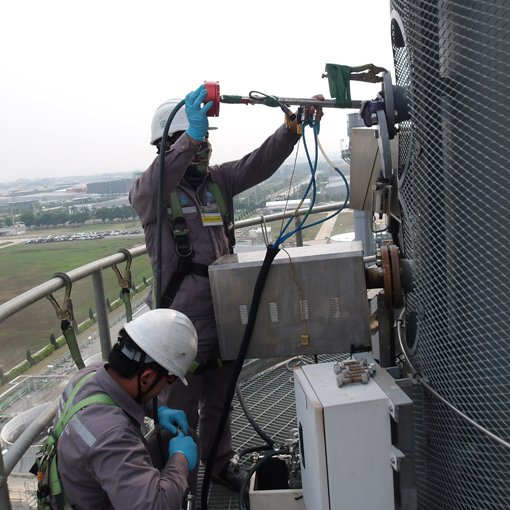
For our combined cycle co-generation plants that use natural gas as the primary fuel, Dry Low NOx (DLN) burners with automated systems are installed to control nitrogen oxides (NOx), the main air pollutant from these operations. We also utilise Continuous Emission Monitoring Systems (CEMS) to measure air pollutants emitted from stacks in real time. These systems are complemented by routine audits every 1–3 years and random stack sampling at Heat Recovery Steam Generators (HRSG) to monitor levels of nitrogen oxide (NOx), sulphur oxides (SOx), dust, oxygen (O₂), stack temperature, and flue gas flow rate. The sampling and testing procedures comply with the U.S. Environmental Protection Agency (U.S. EPA) standards and are conducted in accordance with regulations issued by the Ministry of Industry. In addition, ambient air quality in surrounding communities is regularly monitored and measured every 6 months to ensure that operations do not result in negative impacts on the environment or local communities.
Performance 2025
Overall, emissions of nitrogen oxides (NOx) and dust increased compared with the previous year. This was primarily due to equipment replacements carried out during major overhaul activities at 2 power plants, as well as the installation of new burners at 1 power plant. Following installation, system mapping and adjustments were required to optimise combustion control, resulting in changes to NOx emission levels in line with the new equipment reference values. Consequently, total NOx emissions showed an increasing trend compared with the previous year. Total dust emissions were also higher than the previous year, which is believed to have been influenced by ambient dust conditions during the reporting period. In contrast, sulphur oxides (SOx) emissions decreased, mainly due to the composition of natural gas used as fuel. Nevertheless, we continue to implement measures to control and reduce air pollutant emissions. These include the use of Dry Low NOx (DLN) combustion systems to minimise NOx formation, as well as optimising gas turbine operating parameters to improve fuel combustion efficiency and maintain air emissions within applicable regulatory requirements and standards.
| Unit | 2022 | 2023 | 2024 | 2025 | |
|---|---|---|---|---|---|
| Nitrogen Oxides (NOx) | Metric tonnes | 3,045 | 2,650 | 2,790 | 2,806 |
| Sulphur Oxides (SOx) | Metric tonnes | 94 | 59 | 49 | 43 |
| Dust | Metric tonnes | 124 | 71 | 80 | 98 |
Organisational Environmental Awareness
B.Grimm Power is committed to fostering environmental awareness and providing training for employees and stakeholders, both within and outside the organisation. These efforts aim to enhance knowledge, skills, and understanding of environmental impacts and risks that may arise from our operations.
Performance 2025
B.Grimm Power conducted a total of 3,641 hours of environmental training for employees, focusing on courses relevant to power plant operations. Key training topics included Integrated Management and Internal Audit for ISO 14001:2015, Pollution Control System Operator for Air and Industrial Waste, and Preparation for Eco Factory Certification. In addition, the company organised various programmes and activities to raise awareness of environmental and safety issues:

Workshops and Training Sessions:
Delivered by internal and external experts in accordance with the work plan of the Occupational Health, Safety and Environment (OHS&E) Committee. Key training topics include Sustainability Reporting Based on GRI Standards: Environment and Occupational Health & Safety Aspects, Carbon Footprint for Organization (CFO) in accordance with ISO 14064, and Carbon Footprint of Product (CFP) in accordance with ISO 14067.

Environmental Awareness Activities for Employees:
These encouraged employees to reduce energy, water, waste, and pollution usage in both personal and work settings. Activities included contests for ideas to reduce waste and raw water usage at power plants, "One Hour Power-Off" campaigns during lunch breaks, and the distribution of educational media to raise awareness about environmental and safety issues. In addition, each year the ABP and ABPR power plant groups organise the “Safety, Health, Environment and Energy Conservation Recognition and Observation (SHERO) Month” to promote behavioural change and foster a culture of safety, occupational health, environmental stewardship, and energy conservation. The initiative focuses on practical, on-site activities to raise awareness, such as recognition programmes and competitions that reward employees who demonstrate exemplary environmental and safety behaviours in their daily work.