
Why is it important
In the energy transition within the electricity industry towards clean energy presents both challenges and opportunities for biodiversity. While renewable technologies such as solar power plants, wind power plants, and Energy Storage Systems (ESS) play a pivotal role in reducing greenhouse gas emissions and supporting climate change goals, large-scale project developments may pose land-use challenges. These include habitat loss and water stress, as well as impacts from sourcing critical raw materials, such as mining, which may involve environmental and human rights issues. Simultaneously, this transition allows the utility sector to enhance project development in alignment with ecosystem conservation. This is achieved through accurate land-use planning, avoiding and minimising impacts on ecologically sensitive areas, restoring affected sites, and applying circular economy principles to reduce resource consumption and waste. Such measures enable us to balance energy security with the long-term preservation of the natural resources upon which the world depends.
Target and Performance
| 2025 | 2026-2030 | ||
|---|---|---|---|
| Performance | Target | Target | |
| Projects with biodiversity impact assessments1 conducted every five years (Percentage of total projects) | 100% | 100% | 100% |
| Projects with Biodiversity Action Plans (BAPs) developed and implemented (Percentage of projects with potential biodiversity impacts) | 100% | 100% | 100% |
| Sites located in the protected areas under IUCN2 definition | 0 | 0 | 0 |
| Collaboration with external organisation with relevant expertise to create positive impacts on biodiversity |
|
Expansion of the "Save The Tigers" project to Thong Pha Phum National Park, Kanchanaburi Province | Continuously expand collaborations with external organisations |
1Reassess land use and perform biodiversity impact assessment.
2Covers critical wildlife habitat, legally protected area, area adjacent to World Heritage site, and protected area classified under the International Union for Conservation of Nature (IUCN) Category I-IV.
Management Approach and Strategy
Commitment
B.Grimm Power prioritises protecting, minimising, and mitigating the environmental impacts from our operations, covering the conservation of biodiversity—the variety of life, both flora and fauna, within natural ecosystem—and the protection and preservation of water sources and forested land. We set commitments to develop, and implement group-wide compliance, monitoring, and restoration mechanisms as well as collaborate with external partners to generate a positive impact on biodiversity and no deforestation. Furthermore, we foster collaborations with external partners to enhance Net Positive Impact (NPI) on biodiversity and avoid negative impacts on forested land. In the context of the clean energy transition, we recognise that technology and infrastructure development must be balanced with land use and ecosystem preservation. Consequently, we integrate circular economy practices, efficient resource use, and site restoration to ensure our clean energy operations not only reduce emissions but also sustain biodiversity and create shared value with communities.
In 2022, we announced our Biodiversity and Forested Resource Conservation Commitment , endorsed by the Board of Directors. This commitment applies to all subsidiaries and joint ventures, as well as key stakeholders. It has also been communicated to Tier 1 Suppliers, Non-Tier 1 Suppliers, and business partners, encouraging them to adopt and integrate this commitment into their own operations to foster shared value and mutual benefits. The key components of this commitment are as follows:

Net Positive Impact (NPI)
on biodiversity and ecosystem service by investing in conservation and restoration of biodiversity and ecosystem service.

No Net Deforestation
at all operating sites by implementing future reforestation to compensate for current forest loss.

Avoid operating in significant wildlife habitats, legally protected lands,
World Heritage Sites, and IUCN Category I-IV protected areas.
Governance Structure
B.Grimm Power has established a governance structure of biodiversity and forest resource conservation to ensure that all operations align with our commitments and relevant regulations, while providing comprehensive monitoring of biodiversity and forest resource management performance. The key parties involved and their respective responsibilities are as follows:
Corporate Governance and Sustainability Committee
The Committee provides strategic oversight of corporate sustainability issues and offers recommendations on the Biodiversity and Forest Conservation Commitment, which has been formally approved by the Board of Directors. Furthermore, the Committee plays a vital role in evaluating related risks and opportunities to ensure that the company’s strategic direction and operational guidelines remain steadfastly aligned with Environmental, Social, and Governance (ESG) principles. Regular progress reports are submitted to the Board of Directors.
Occupational Health, Safety, and Environment Working Team
Comprising senior management representatives and professional safety officers from both the Bangkok Office and power plants, this working team closely collaborates with the power plant operations department. Their primary responsibility is to oversee and monitor compliance with environmental mitigation measures and Biodiversity Action Plans (BAPs). They also maintain vigilance over potential biodiversity risks and impacts arising from operational projects, reporting performance outcomes and findings are directly reported to the Corporate Governance and Sustainability Committee.
Corporate Safety Health and Environment Department (Corporate SHE)
This department is responsible for defining risk and impact assessment frameworks, as well as establishing practical guidelines to mitigate risks to biodiversity and forest resources throughout a project’s lifecycle from development to operation. These processes incorporate expertise from relevant agencies and specialists, referencing both national and international biodiversity databases. The department ensures that project managers and relevant personnel are well-informed and compliant with these standards. Additionally, they collaborate with project leads to conduct biodiversity impact assessments during the development phase. Should any risks be identified, appropriate action plans are formulated and monitored continuously. The Corporate SHE Department reports to Head of Corporate Sustainability, who directly reports to the President - Thailand, Malaysia and Energy & Industrial Solutions Business.
Social Enterprise Department, and Social Engagement Department
Working with Corporate SHE department to develop biodiversity initiatives aligned with the organisation’s goals to creating a Net Positive Impact (NPI). These initiatives are designed to deliver maximum value to stakeholders surrounding our power plants and at the national level. They are also responsible for communicating biodiversity policies, operational guidelines, and project information to both internal and external stakeholders, while fostering collaboration and raising awareness among employees, contractors, suppliers, and regulatory agencies.
Strategy
Committed to creating a Net Positive Impact on Biodiversity and No Net Deforestation

Comply with local and international laws, regulations, and mandatory standards regarding biodiversity, forestry, and environment.

Assess nature-related risks and opportunities related to our businesses, considering our dependencies and impacts on nature.

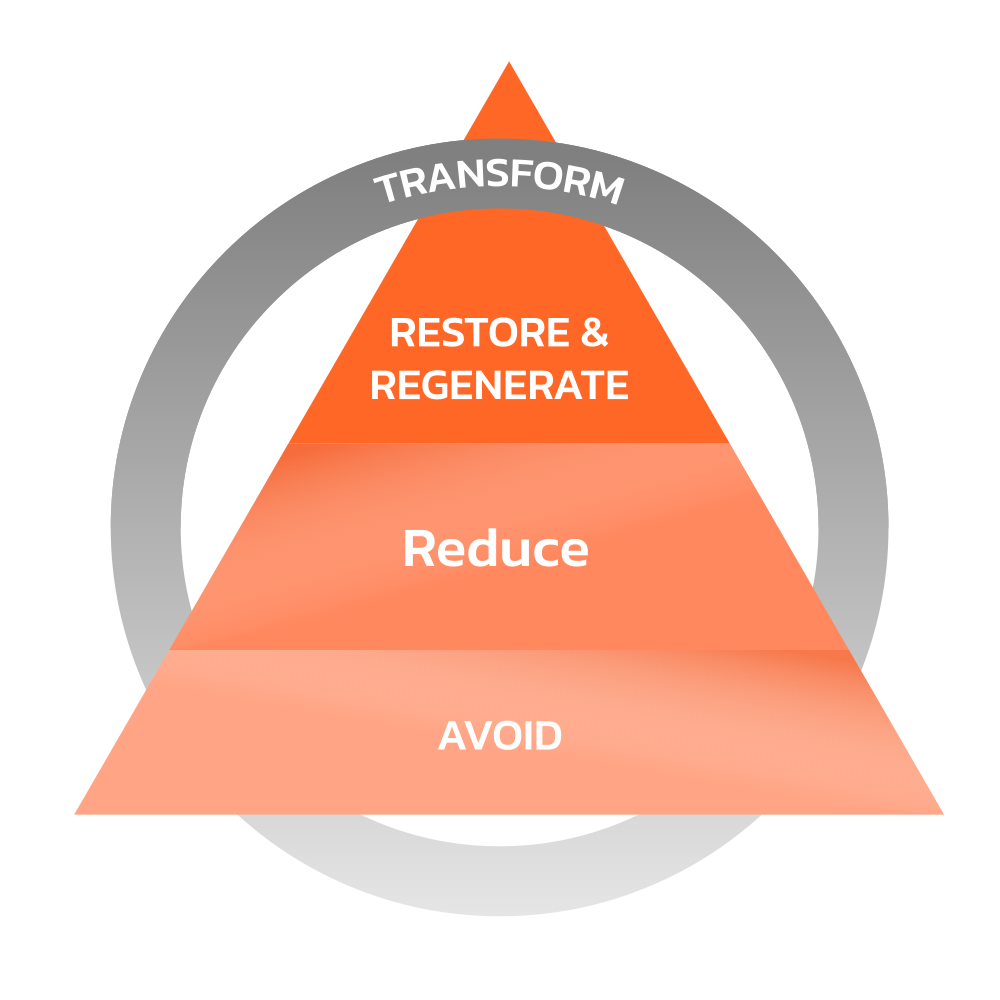
Ensure that all our operational activities that potentially impact biodiversity are strictly controlled through operational procedures, under the “Mitigation Hierarchy” principle.

Prepare Biodiversity Action Plans including monitoring mechanisms for all relevant locations.

Regularly monitor our progress in achieving Net Positive Impact on biodiversity through collaboration with external organisations or experts.

Develop a system to collect and monitor the impact on forest areas and review the operational activities of relevant business units and suppliers in high-risk areas to ensure compliance with all applicable laws.

Collaborate with our Tier 1 Suppliers and Critical Suppliers (Non-Tier 1 Levels) to assess their risks and impacts on biodiversity and deforestation.

Publicly communicate our progress and targets according to the Biodiversity and Forested Resource Conservation Commitment on an annual basis.
Nature and Biodiversity-related Business Risk and Opportunity Assessment
Our dependence on natural resources, with the business impacts on nature and biodiversity, are key factors used in assessing nature-related business risks and opportunities. B.Grimm Power adopts the Taskforce on Nature-related Financial Disclosures (TNFD) framework to identify, assess, and manage risks and opportunities that may affect our business operations, financial performance, and long-term sustainability. Furthermore, B.Grimm Power has implemented the LEAP (Locate, Evaluate, Assess, Prepare) approach—as recommended by the TNFD framework as a systematic framework for assessing nature-related issues across our entire value chain. This enables us to identify risk areas, evaluate impact levels, and establish appropriate management measures. The application of this framework within our reporting enhances transparency, providing stakeholders with a clear overview of our nature-related risks and opportunities, while ensuring a comprehensive understanding of the strategies and measures we employ to manage these issues. The details are as follows:
1. Identification of Material Nature Dependencies and Impacts
- Identify the nature dependencies and impacts associated with electricity generation from natural gas, wind, hydropower, and solar energy, based on data from the Exploring Natural Capital Opportunities, Risks and Exposure (ENCORE) platform.
- Screen and identify key nature dependencies and impacts relevant to our business, based on insights from internal stakeholders, management, and external experts. The key issues identified are as follows:
Dependencies

Climate Regulation

Surface Water

Flood and Storm Protection
Impacts

GHG Emissions

Water Pollution
2. Identification of Nature and Biodiversity-related Risks and Opportunities at The Business Level
- Identify biodiversity-related risks and opportunities based on key nature dependencies and impacts identified in Step 1, and integrate them into the Enterprise Risk Management (ERM) framework as follows:
| Physical Risks | ||
|---|---|---|
| Risks | Nature Dependencies and Impacts | Corporate Risk Mitigations |
| Natural Disasters such as floods, typhoons and landslide |
|
|
| Water Scarcity in Water Stress Areas |
|
|
| Habitat and Biodiversity losses |
|
|
| Transition Risks | ||
|---|---|---|
| Risks | Nature Dependencies and Impacts | Corporate Risk Mitigations |
| Reputational Risks |
|
|
| Policy and Legal Risks |
|
|
- Identify nature and biodiversity-related opportunities, including improving resource efficiency, expanding into businesses with lower environmental impact, forming partnerships with global businesses that prioritise nature and biodiversity conservation, gaining access to sustainability-related financial benefits such as issuing Sustainability-Linked Bonds or securing Green Loans, and obtaining Social License to Operate from communities.
3. Identification of Nature Sensitive Areas among Projects
- The projects that located in nature sensitive areas are considered to have a significant potential impact on biodiversity, which are assessed based on the following criteria:
- Biodiversity importance and richness of natural areas nearby the projects, based on the protected area databases and the International Union for Conservation of Nature (IUCN) Red List of Threatened Species, to identify the type of protected areas, threatened floras and faunas’ presences, and their proximity to the projects.
- Water Scarcity around project areas, based on water related risks mapping tool, AQUEDUCT Water Risk Atlas from World Resource Institute.
- Impact on the access to nature for indigenous people and affected communities.
- The projects located in nature sensitive areas must develop and implement a Biodiversity Action Plan (BAP) in alignment with the mitigation hierarchy to ensure that the project does not cause significant adverse impacts on biodiversity.
4. Implementation to Prevent Nature and Biodiversity Impact according to Mitigation Hierarchy Principle
| Avoid |
|
|---|---|
| Minimise |
|
| Restore and Regenerate |
Focus on restoration and ecosystem regeneration, as well as offsetting unavoidable or non-restorable impacts, to support operations that contribute to long-term positive impact on ecosystems.
|
| Transform |
|
Performance 2025
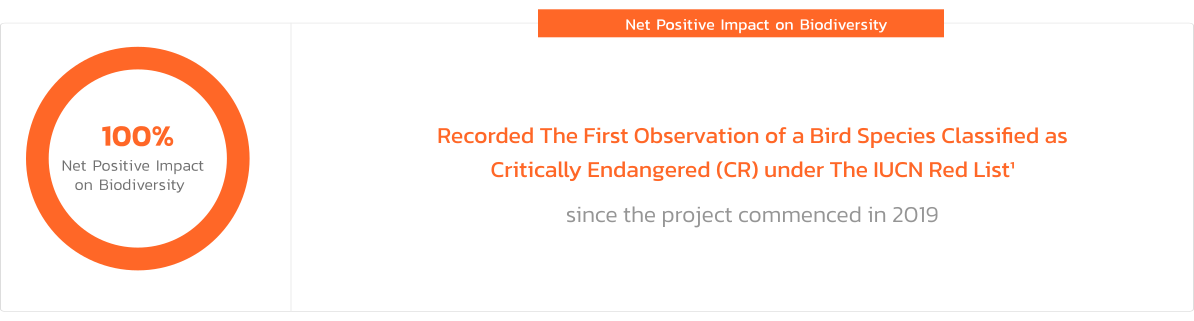
1The IUCN Red List of Threatened Species is a globally recognised database for assessing the conservation status of species, developed by the International Union for Conservation of Nature (IUCN).
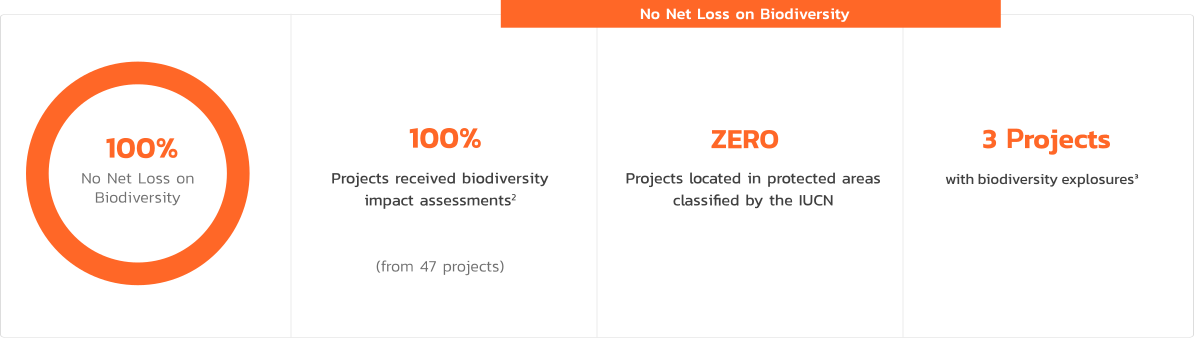
2All 47 projects have undergone reviews every 5 years of land use and biodiversity impacts. Biodiversity Action Plans (BAPs) have been developed and implemented for projects identified as having biodiversity-related risks, along with compensatory reforestation for projects affecting forest areas.
3Develop and implement a Biodiversity Action Plan for projects identified as posing biodiversity risks. This includes conducting compensatory reforestation for projects impacting forested areas, ensuring the restoration of suitable habitats for wildlife that previously inhabited the area prior to construction.
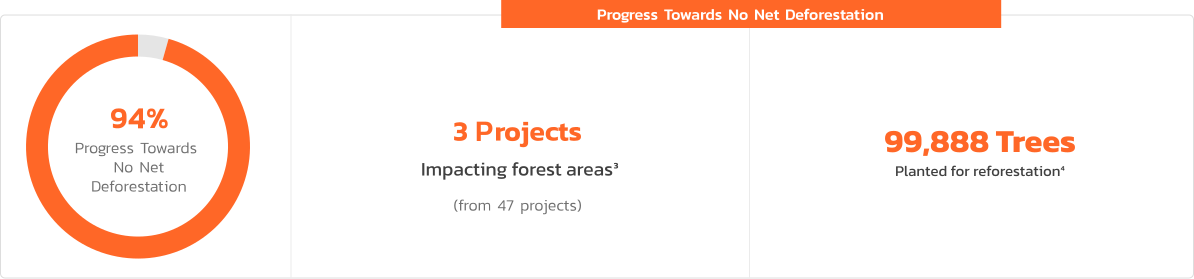
4The total number of trees planted from 2008 to 2025, excluding those planted by other companies within the B.Grimm Group.
Biodiversity and Forested Area Impact Assessment Results
In 2025, B.Grimm Power operated a total of 47 operating projects, covering a total area of 1,072.1 hectares (10.7 sq.km.). This figure excludes solar rooftop projects, and LNG trading business, as these do not have a significant land-use footprint. All projects have undergone a comprehensive land and biodiversity review within the past 5 years, and no changes in land use patterns or significant biodiversity impacts have been identified.
Based on our assessments, 3 projects were identified as having potential biodiversity risks, these are solar power plants in Thailand, covering a total area of 24.3 hectares (0.2 sq.km.), equivalent to 2.3 percent of the total operating area, are exposed to biodiversity risks. In addition, 3 hydropower plants in Laos were found to impact forested areas, covering 3.4 hectares (0.03 sq.km.), or 0.3 percent of the total operating area. Biodiversity Action Plans have been implemented for projects identified as posing biodiversity risks, as well as compensatory reforestations have been conducted at projects impacting forested areas, ensuring the restoration of suitable habitats for wildlife that previously inhabited the areas prior to construction. In this regard, no project was found in areas under legal protection, such as areas next to a world heritage site and areas protected under the IUCN Category I-IV.
Performance of Biodiversity Action Plans for Nature Positive Impact
Biodiversity risk and impact assessment revealed that 3 solar power plants, located in Lat Krabang, Nong Chok Districts, Bangkok, and Sai Noi District, Nontaburi, are situated within an Important Bird and Biodiversity Areas (IBA), as designated by the World Database on Protected Areas (WDPA).
In response, we conducted a comprehensive studies on bird species diversity and their behavioural patterns within the project sites and surrounding areas to assess risks and determine appropriate management measures. Biodiversity Action Plans (BAPs) were developed to avoid and minimise negative impacts on IBAs and to support the principle of No Net Loss of biodiversity. Our key operational targets for these critical areas are as follows:
- Maintain the integrity of IBAs to prevent habitat loss for migratory birds, supported by continuous monitoring.
- Restore green zones around projects by no less than 5 percent, incorporating native plant species to create food sources and nesting habitats.
- Produce biodiversity monitoring reports and disclose them to the public.
To achieve these objectives, we have implemented measures focused on avoidance, mitigation, and continuous ecosystem monitoring, including:
- Avoiding the use of persistent herbicides that could impact birds and wildlife within the project areas.
- Maintaining vegetation to ensure suitability as bird habitats, such as regulating grass-cutting heights to avoid clearing to ground level.
- Restoring open spaces within projects by planting fast-growing native species, such as tall grasses and reed clusters.
- Improving access roads and project perimeters to preserve bird-friendly habitats and promoting the planting of flora in nearby public areas in coordination with local authorities.
- Recording data on injured or deceased birds and wildlife within project sites to refine mitigation measures for biological resources.
- Engaging external experts to conduct periodic assessments of bird biodiversity and species richness both within and surrounding the project areas.
These approaches reflect B.Grimm Power’s commitment to operating a clean energy business in tandem with biodiversity conservation, prioritising the protection of key species' habitats and the long-term restoration of ecosystems.
Bird Species Survey Results During the Operation Phase (6-year period)
B.Grimm Power has consistently surveyed bird species diversity at our solar power plant sites throughout the project lifecycle. This encompasses the construction phase (December 2018 – February 2019), the operational phase (December 2021 – February 2022), and the most recent survey conducted from November 2024 to February 2025, aimed at evaluating ecosystem trends and biodiversity impacts.
The 2025 survey results, reflecting 6 years of continuous operation, indicate that the environment within the project sites has been restored in a manner that supports avian use. This has resulted in an increase in both the population and variety of bird species compared to the construction phase. Furthermore, land-use patterns within a 1-kilometre radius of the projects provide suitable habitats for diverse bird groups, including waterbirds, shrubland birds, grassland birds, forest birds, and certain urban species, indicating that the impact of our operations on biodiversity is minimal.
Significantly, the 2025 survey recorded—for the first time since the start of operations in 2019, the presence of a species classified as Critically Endangered (CR) on the IUCN Red List: the Yellow-breasted Bunting (Emberiza aureola). This discovery highlights our ecosystem-conscious land management and our success in avoiding and minimising impacts on wildlife habitats through scientifically grounded monitoring. This achievement is a point of pride for our team and serves as a catalyst for integrating nature and biodiversity issues into our systematic business operations over the long term.
Furthermore, comparative data from 2019, 2022, and 2025 show that species classified as Near Threatened (NT), including the Spot-billed Pelican (Pelecanus philippensis), the Asian Golden Weaver (Ploceus hypoxanthus), the Oriental Darter (Anhinga melanogaster), and the Red-necked Stint (Calidris ruficollis), rotate through the surveyed areas annually. This reflects the dynamic nature of the ecosystem and the suitability of the sites as habitats for diverse species. These findings confirm that B.Grimm Power’s clean energy projects can effectively co-exist with and maintain ecosystem integrity.
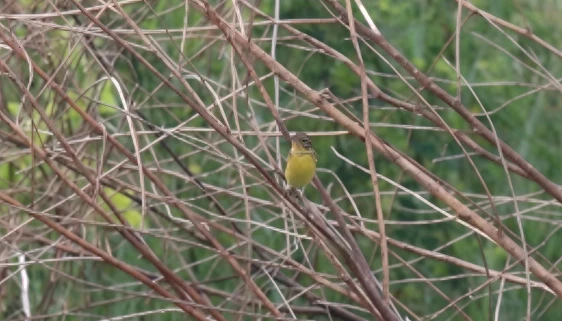
Emberiza aureola
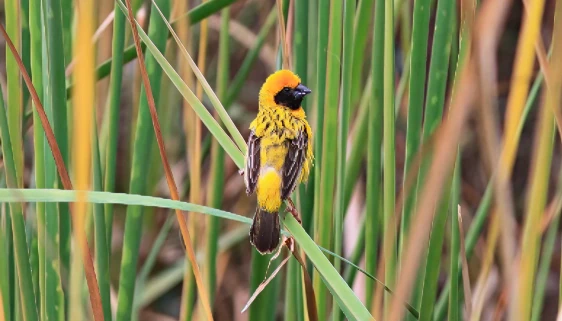
Ploceus hypoxanthus
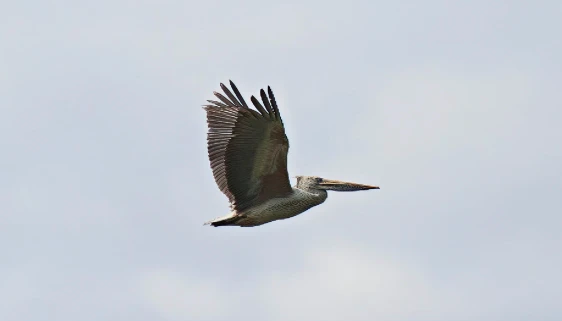
Pelecanus philippensis
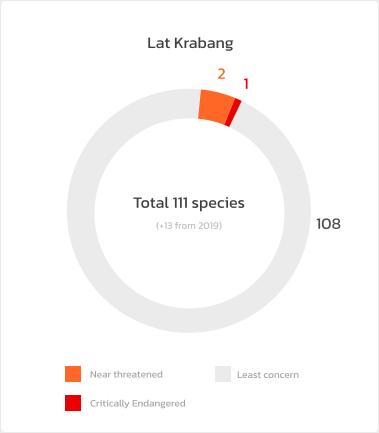
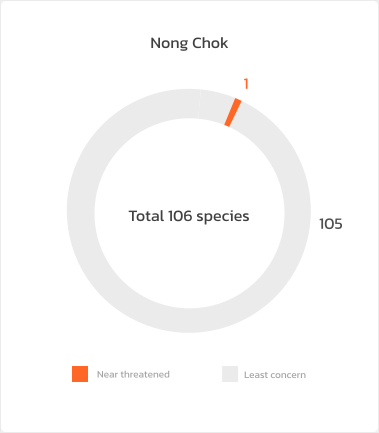
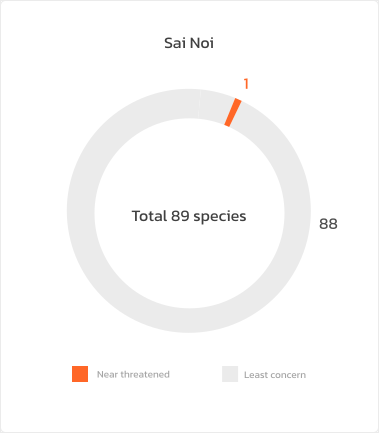
1Conservation status according to the IUCN Red List of Threatened Species represents the global extinction risk of species and is classified into several categories as follows: CR (Critically endangered): extremely high risk of extinction in the wild, EN (Endangered): high risk of extinction in the wild, VU (Vulnerable): likely to become endangered, NT (Near-threatened): may be vulnerable to endangerment in near future, and LC (Least concern): at low risk of extinction; widespread and abundant in nature
Performance of Forest Stewardship
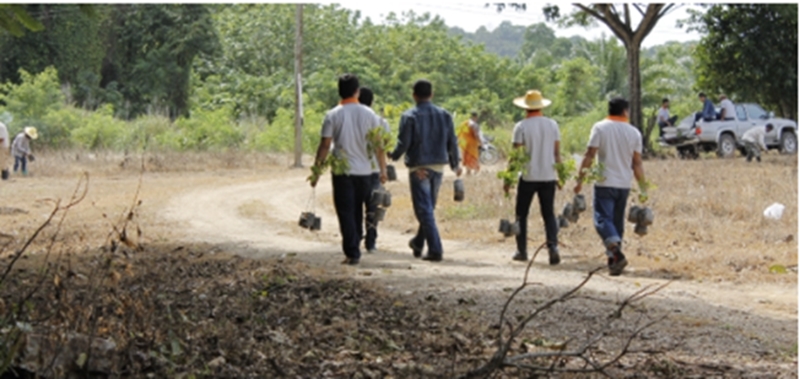
B.Grimm Power collaborates with relevant agencies, including the Royal Forest Department, the Industrial Estate Authority of Thailand, and various local organisations, to implement ongoing reforestation projects initiated in 2018. Recognising the critical importance of restoring degraded and declining forest areas, which directly impacts ecosystems and the environment, we are committed to expanding forested land to foster biodiversity and natural equilibrium. These efforts aim to enhance wildlife habitats and breeding grounds, increase greenhouse gas sequestration, and develop these areas into ecological learning centres to foster environmental conservation awareness within surrounding communities and society.
In 2025, we implemented tree-planting projects totalling 99,888 trees, covering a cumulative area of 15.1 hectares in Thailand and over 60.2 hectares in Lao PDR. These achievements were realised through diverse activities and collaborations designed to restore ecosystems, increase green spaces, and tangibly support regional Sustainable Development Goals (SDGs). Key projects in Thailand include the "Embracing the World with Blue Carbon" initiative, the "Forest Restoration through Royal Grace" project (Mother's Day), and the "Natural Resource and Environmental Conservation and Restoration" programme. Other notable activities include "Reducing Global Warming with Our Hands," the "Global Warming Reduction Campaign," the "Tree Planting for Green Space Expansion" activity, the "Mangrove Conservation Volunteer" project, the "Reforestation in Honour of Her Majesty Queen Suthida Bajrasudhabimalalakshana," and the "Green Space Expansion and Natural Resource Conservation (Community Forest)" project.
Concurrently, B.Grimm Power has carried out reforestation and land restoration projects in Lao PDR, covering areas around our hydropower plants, specifically Xenamnoy-2 and Xekatam-1 (XXHP) and Nam Che 1. These endeavours reflect the organisation’s steadfast commitment to conserving and restoring natural resources, enhancing biodiversity, expanding green cover, and contributing to the mitigation of climate change impacts across both Thailand and the region in a continuous and sustainable manner.
Performance in Collaboration with External Experts to Create a Net Positive Impacts on Biodiversity
B.Grimm Power is dedicated to fostering collaborations with expert external organisations to create a Net Positive Impact on biodiversity. Our approach emphasises the active participation of communities and all groups of stakeholders. We encourage our partners to operate in accordance with sustainable ecosystem conservation and restoration principles and actively drive biodiversity policy development alongside government agencies. This is exemplified by our Memorandum of Understanding (MOU) with the Office of Natural Resources and Environmental Policy and Planning (ONEP) to cooperate on biodiversity conservation. Furthermore, we continuously support activities aimed at building knowledge and understanding of biodiversity for both the public and private sectors, as follows:
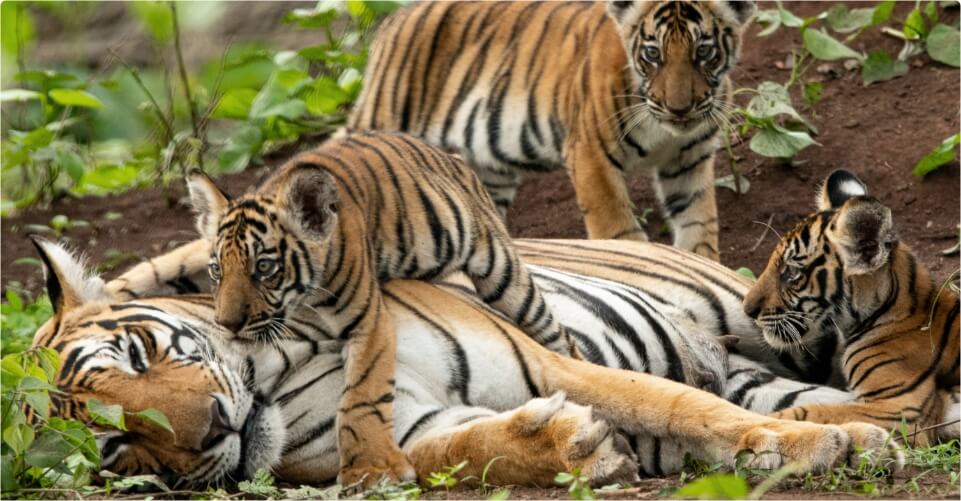
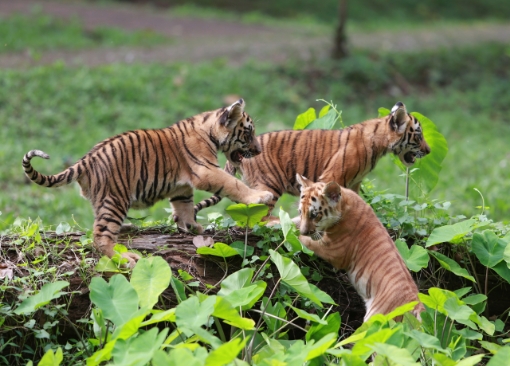
Save the Tigers Project
B.Grimm Power is committed to wildlife protection and ecosystem restoration through 2 key dimensions of operations
- Expansion of Conservation Operational Areas: In collaboration with the Department of National Parks, Wildlife and Plant Conservation (DNP) and the Freeland Foundation, B.Grimm Power has expanded the "Save The Tigers" conservation and restoration project to Thong Pha Phum National Park in Kanchanaburi Province. This area spans over 150 kilometres along the border with Myanmar. The initiative focuses on enhancing the capacity of park rangers, developing tiger population monitoring and surveillance systems, and promoting local community engagement to increase the population and ensure the long-term survival of tigers and other wildlife.
- Capacity Building for Conservation Management: Alongside the development of tiger populations, B.Grimm Power has partnered with the Amata Foundation, the DNP, and Global Parks (USA) to conduct the Competency Development Programme for Park Management. Currently, in its 4 consecutive years, the programme has trained over 390 officers from national parks and wildlife sanctuaries nationwide. This reflects our steadfast commitment to elevating natural resource management, strengthening regional cooperation, and supporting sustainable forest ecosystem restoration.
International Knowledge Sharing
B.Grimm Power participated in the exhibition and hosted a booth at the International Conference on Biodiversity 2025 (IBD 2025), held under the theme “Biodiversity and Humanity in Global Crisis”, to share insights and promote global biodiversity awareness.