
Why it is important
The energy business is closely connected to land and local communities throughout the project lifecycle, from development and construction to long-term operations. Strong community relationships are therefore essential to business continuity, effective social risk management, and future investment decisions. Achieving a Social License to Operate is critical to ensuring smooth operations and reducing risks related to delays and project uncertainty.
Amid global changes such as the transition to a low-carbon economy, technological advancement, social inequality, and geopolitical uncertainty, expectations of energy companies continue to rise beyond reliable power generation. Developing people and communities—through access to education, future-ready skills, and support for education, music, sports, infrastructure, and environmental stewardship—strengthens community resilience, supports the energy transition, and enables sustainable long-term business growth.
Target and Performance
| 2025 | 2030 | ||
|---|---|---|---|
| Performance | Target | Target | |
| Students Receiving Support in STEM Skills Development1 | |||
| Kindergarten and primary level students | 215,422 | 226,000 | 400,000 |
| University and vocational level students | 213 | 200 | 300 |
1Cumulative number of students since the project began. Kindergarten and primary level projects started in 2010, while university and vocational level projects started in 2011.
Management Approach and Strategy
Commitment
B.Grimm Power operates under the vision of “Empowering the World Compassionately”, with a strong commitment to creating shared value and sustainably enhancing the quality of life of communities and society. We place great importance on preventing and managing potential impacts arising from its operations on stakeholders surrounding its power plants through appropriate control and management measures, regular assessments of community needs, as well as continuous support, development, and participation in community activities. These efforts aim to enable stakeholders to grow alongside the organisation in a stable and sustainable manner.
In addition, B.Grimm Power is committed to respecting stakeholder rights and ensuring fair treatment in accordance with recognised good practices in stakeholder management. We adopt the AA1000 Stakeholder Engagement Standard (AA1000SES 2015) as a guiding framework to effectively identify, assess, and respond to impacts affecting all stakeholder groups (see our Stakeholder Engagement Procedure), This approach covers stakeholders at the local level surrounding power plant operations, including communities and society, relevant government and public sector agencies, local administrative organisations, as well as vulnerable groups in the project areas. Stakeholder engagement is guided by the core principles of inclusivity, materiality, and responsiveness, fostering long-term trust, balance, and sustainable relationships between B.Grimm Power and its stakeholders. (read more under the Stakeholder Engagement section).
Governance Structure
B.Grimm Power has established the “BGP Community Work Center” working group to serve as a key mechanism for defining the direction and overseeing the implementation of community and social development initiatives in alignment with B.Grimm Power’s goals and strategic priorities. The working group also serves as a central platform for exchanging information, knowledge, and best practices, as well as for jointly discussing solutions to operational challenges among relevant departments. The working group convenes on a quarterly basis to monitor progress and review performance outcomes. The results are subsequently reported to senior management and the Board of Directors, through the Corporate Governance and Sustainability Committee, at least once annually to ensure effective and continuous oversight. In addition, B.Grimm Power conducts performance evaluations of departments responsible for community development activities using appropriate indicators aligned with the nature of their operations. This enables continuous monitoring, support, and enhancement of the effectiveness of community and social development initiatives. The working group consists of:
- A Senior Executive (Executive Vice President – Industrial Customer Relations and Operation Management) oversees community engagement, sets strategic direction, and reviews the effectiveness of community and social development management, including stakeholder engagement.
- Social Enterprise Department is committed to fostering strong and sustainable relationships with communities, society, and stakeholders across all sectors. It serves as a key mechanism for connecting the organisation with stakeholders through transparent communication, the provision of accurate information, and the promotion of mutual understanding of the B.Grimm Power’s operations, with the aim of building trust and long-term collaboration. The department continuously listens to community feedback, concerns, and expectations to inform appropriate responses and development initiatives. These efforts encompass initiatives to enhance quality of life, support infrastructure development, and promote activities that generate social and environmental benefits. The department works closely with employees, customers, government agencies, and partner organisations to drive initiatives that deliver tangible and sustainable positive impacts, with the ultimate goal of achieving balanced growth and creating shared value for society as a whole.
- Social Engagement Department is responsible for the corporate-wide social and community engagement programmes and communicating our efforts in an accurate and transparent manner.
Strategy
B.Grimm Power has established a community development strategy aligned with business operations, vision, and corporate mission, while supporting the United Nations Sustainable Development Goals (SDGs). B.Grimm Power places strong emphasis on fostering collaboration and maintaining constructive relationships with stakeholders across all sectors in order to gain a comprehensive understanding of their needs and expectations. This approach enables B.Grimm Power to design and implement programmes and activities that are appropriate and effective in creating positive impacts for both internal and external stakeholders. Community development initiatives encompass key areas including education, social and quality of life development, arts and culture, religion, sports, and the environment, as detailed below.
Social and Community Development Strategy


Local Stakeholder Management (Communities Surrounding Power Plants)
B.Grimm Power places strong importance on engaging with local stakeholders surrounding its power plants, with the aim of fostering mutual understanding and promoting sustainable development. This is achieved through continuous communication and engagement with local communities, business partners, regulatory authorities, and other relevant stakeholders. B.Grimm Power implements stakeholder engagement in accordance with its Stakeholder Engagement Policy and with reference to the AA1000 Stakeholder Engagement Standard to ensure that the perspectives, feedback, and recommendations of all stakeholder groups are comprehensively considered and incorporated into decision-making processes at both the project and organisational levels.
This approach not only helps strengthen relationships and build trust with local stakeholders but also enhances the effectiveness of managing local concerns and issues in an appropriate manner. Such engagement is a key factor supporting operational success and the long-term sustainability of B.Grimm Power. To achieve these objectives, B.Grimm Power has established stakeholder engagement strategies for all power plants, with the following implementation approaches:
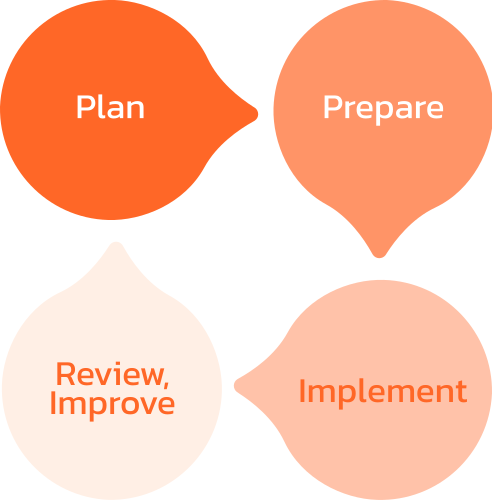
- Plan and Prepare
- Designated the Social Business Department, under the Industrial Customer Relations and Power Plant Operations Division, as the responsible unit.
- Assess the potential negative impacts that may arise from power plant operations on local stakeholders, such as water resource uses, waste disposal, air pollution and noise, including defining the scope of these impacts on stakeholders within a radius of 1-5 kilometres around the power plant.
- o Create a stakeholder profile database at the power plant level, including information such as names, positions, attitudes towards the power plant, and concerns or expectations. This also includes assessing their level of influence and interest to evaluate the impact or significance of stakeholders on the power plant.
- Develop an annual stakeholder management plan, which includes levels of engagement, methods of engagement, frequency, budgets, and responsible team.
- Implement
- Conduct the Public Participation forums, Bilateral meetings (company and community), and Tripartite meetings (company, community, and government agencies) regularly. These provide opportunities for stakeholders to engage and discuss issues or concerns, such as environmental impacts, public health, sustainable energy management, and mutual development needs. These forums also serve to educate, foster understanding, and exchange views on power plant operations, ensuring stakeholders receive accurate information and can continuously monitor company activities during both construction and operation phases.
- Conduct annual social surveys to gather feedback, suggestions, and concerns from stakeholders around the power plant, such as local residents, community leaders, and government representatives. The main objectives are to: 1) Study the surrounding socio-economic conditions to understand actual problems and needs; 2) Assess awareness, issues or concerns, and the need for information or contact channels with the power plant; and 3) Gather opinions, concerns, and satisfaction with past and current community-engaged projects.
- Organise annual power plant site visit programmes for stakeholders to understand production processes and gain accurate knowledge about the power plant, including its safety and environmental impacts and mitigations. These visits also provide stakeholders with contact information and communication channels with the organisation, such as contact numbers for responsible officers, suggestion boxes, and online platforms like Line or Facebook groups.
- Hold informal meetings with local stakeholders regularly, such as focused group between community leaders and community relations officers. These meetings facilitate quick and effective communication of needs, problems, or concerns, allowing for in-depth explanations in a local, friendly and non-technical language to ensure that they can understand the information provided effectively.
- Use feedback from participation meetings, surveys, and various activities to plan and improve management strategies. This also includes designing or enhancing social development projects that meet the needs of stakeholders around the power plant.
- Review & Improve
- Establish key performance indicators for relevant departments, such as measuring local stakeholder satisfaction around the power plant and response times to complaints or concerns.
- Conduct training, meetings, and discussions between power plants for teams involved in local stakeholder management. These sessions aim to share experiences, suggest best practices, and identify observation to improve and align stakeholder management practices across all power plants.
- Track the number of complaints, suggestions, and feedback from stakeholders, and report the results to management. Additionally, report significant complaints on the company's website.
Training and Development
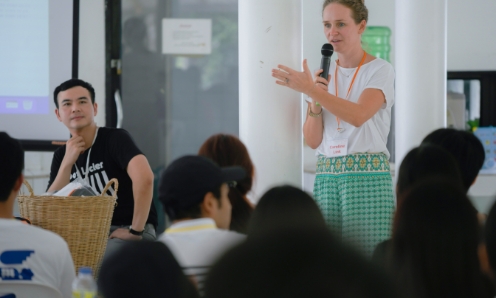
B.Grimm Power is committed to continuously developing the capabilities of employees and relevant personnel through training and knowledge development programmes. These initiatives aim to enhance understanding and equip employees with the necessary skills for stakeholder relationship management, effective operational management, and the promotion of structured and appropriate stakeholder engagement processes. B.Grimm Power places particular emphasis on strengthening conflict management capabilities to enable employees to effectively and fairly address complaints and concerns raised by stakeholders in communities surrounding its power plants. Training for relevant employees is conducted annually through various formats, including seminars, workshops, expert lectures, and self-directed learning via the B.Grimm Academy. In addition, B.Grimm Power provides channels and platforms for knowledge and experience sharing among relevant departments, both through online platforms and workshop sessions. These initiatives promote collaborative learning and support the continuous enhancement of operational effectiveness.
Performance 2025
- The investment value for community and social development exceeds THB 252 million.
- STEM skills development for students:
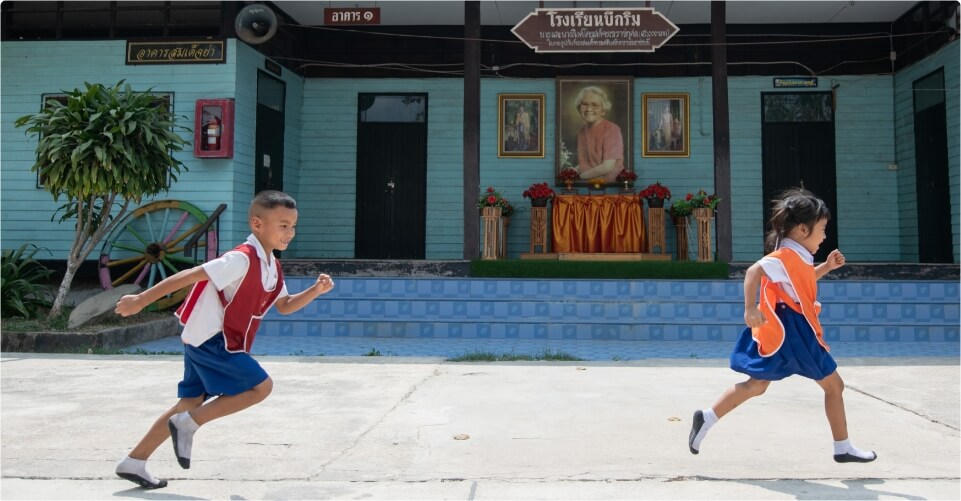
- 19,100 kindergarten and primary school students received science and learning enrichment through the Little Scientists’ House Project, bringing the cumulative number of students equipped with STEM knowledge to over 215,422 since the project’s inception in 2010. B.Grimm Power plans to expand the programme to communities surrounding other power plants, supporting broader access to learning opportunities for young people in line with the target of 400,000 beneficiaries by 2030.
- 14 university students received on-the-job training through Harbour.Space Project and the project under collaboration with leading domestic universities. Since the project’s inception in 2011, the cumulative number of students equipped with STEM knowledge has reached 213.
- Implemented the “Saengtham Thuathai” project by installing on-grid solar photovoltaic systems with a total capacity of 78 kW across 10 temples, schools and community healthcare facilities in 7 provinces. Each site was equipped with a capacity of approximately 5–10 kW, generating average electricity cost savings of THB 2,500–6,000 per month per site, or approximately THB 612,000 per year in total.
- Collaborated with the National Science and Technology Development Agency (NSTDA) to develop the pilot project “Smart Agriculturist for Thailand’s Future” by installing 6 kWp semi-transparent solar panels at Wat Bangkadi Community School, Pathum Thani Province. The system generates electricity without obstructing sunlight, allowing the area beneath to be used for agriculture and learning activities. It produces approximately 720 kWh per month, delivering annual electricity cost savings of around THB 40,608, and serves as a model for integrating Smart Energy, Smart Farm and Smart Environment to support sustainable community development.
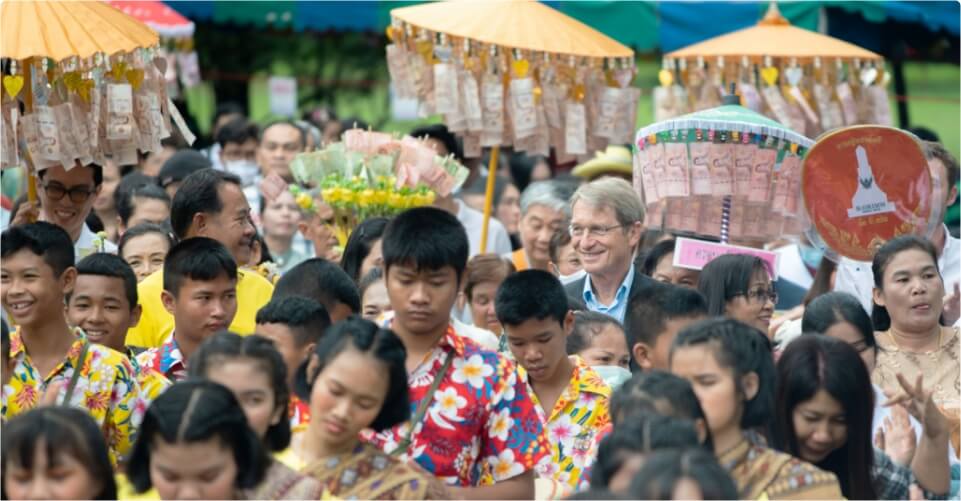
- Conducted the “B.Grimm Open House Open Heart 2025” programme to provide communities and stakeholders surrounding power plants with opportunities to visit, learn about and gain first-hand understanding of power plant operations. The programme covered electricity generation processes, environmental management, safety measures and community impact management, under the theme “Clean and Safe Power Plants Supporting Communities”, with the aim of enhancing transparency, trust and long-term relationships with stakeholders.
- Support for the equestrian competitions at the 33rd Southeast Asian Games (SEA Games), hosted at B.Grimm Thai Polo & Equestrian Club, Pattaya, covering three disciplines: Dressage, Jumping, and Eventing. The initiative promoted friendship and sporting excellence in equestrian sports across ASEAN.
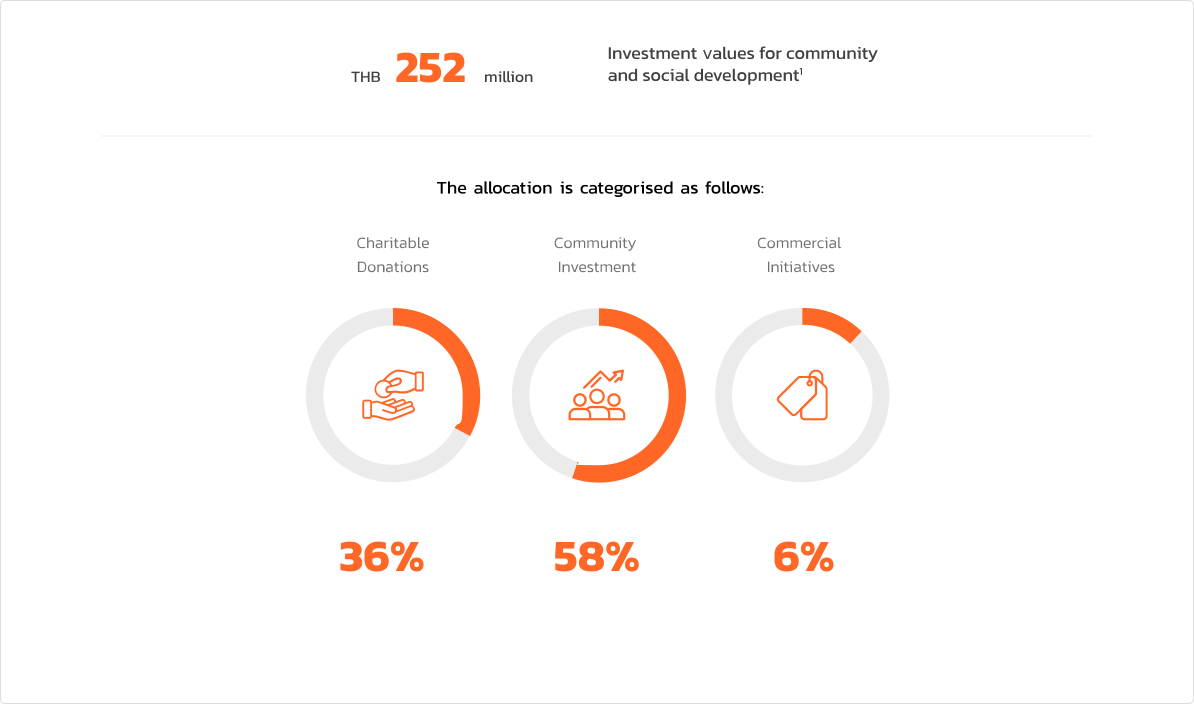
1No political contribution including charitable contributions and sponsorship, in line with our Anti-Corruption Policy. B.Grimm Power has no intention to provide political support or assistance, whether in money or any other assets, to political parties, political groups, politicians, and persons directly or indirectly involved in politics.
Highlight Projects