

Foster STEM education at all levels to support economic prosperity and future growth
B.Grimm Power is committed to advancing Science, Technology, Engineering, and Mathematics (STEM) knowledge and skills at all educational levels through tailored content and training programmes designed for different age groups to maximise learning effectiveness. Our initiatives are structured into 2 levels: 1) Kindergarten and primary levels - covering early childhood, primary, and secondary students, as well as pre-university vocational students; and 2) University and vocational levels - supporting university and vocational college students. Our goal is to equip participants with future-ready knowledge and skills, enabling them to develop themselves and pursue stable career growth.
Kindergarten and primary levels
B.Grimm Power is committed to promoting the foundation of STEM learning skills for kindergarten and primary students. The goal is to support more than 400,000 students by 2030 through various projects. The key projects are as follows:
The Little Scientists’ House of Thailand
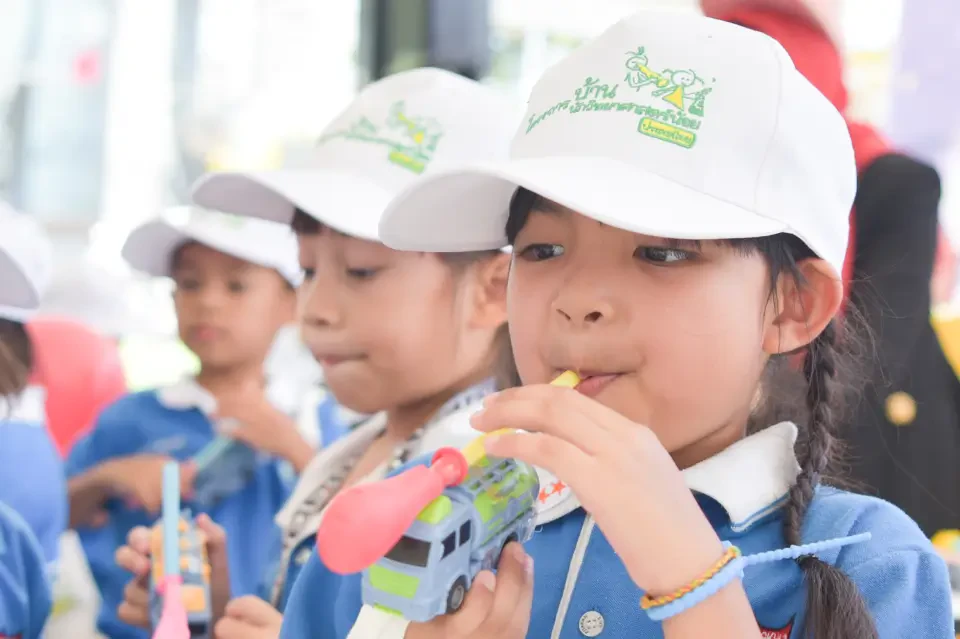
Her Royal Highness Princess Maha Chakri Sirindhorn initiated the Little Scientists’ House Thailand project in collaboration with the Haus der kleinen Forscher Foundation, launching a pilot programme in Thailand through a partnership of 8 public and private sector network partners. B.Grimm Power has been a founding partner since the project’s inception and continues to expand its impact. The initiative aims to nurture an interest in science among young children aged 3–6 years while extending its reach to primary education through learning activities, educational material development, teacher training, and family engagement programmes.
Since 2010, B.Grimm Power has consistently supported local schools within its network, now covering 137 schools under our care. Our focus is on enhancing science education by training teachers and engaging employees as “scientist and engineer mentors”, who assist in classroom activities and interactive learning experiences to ensure the programme’s objectives are met. This project has also expanded its scope to encompass Education for Sustainable Development (ESD) by adapting the United Nations’ sustainable development framework to suit early childhood and primary education. Our aim is to shift perspectives from a human-centred (Human Centre) approach to consider that the earth is at the centre (Earth Centre) of the development of things that are interdependent. This encourages learners to become aware (Realise) of various issues about the world, leading to action (Act) to deal with the problem, and empowers them (Empowerment) to tackle challenges such as pollution and climate change, through hands-on, action-based learning (Action).
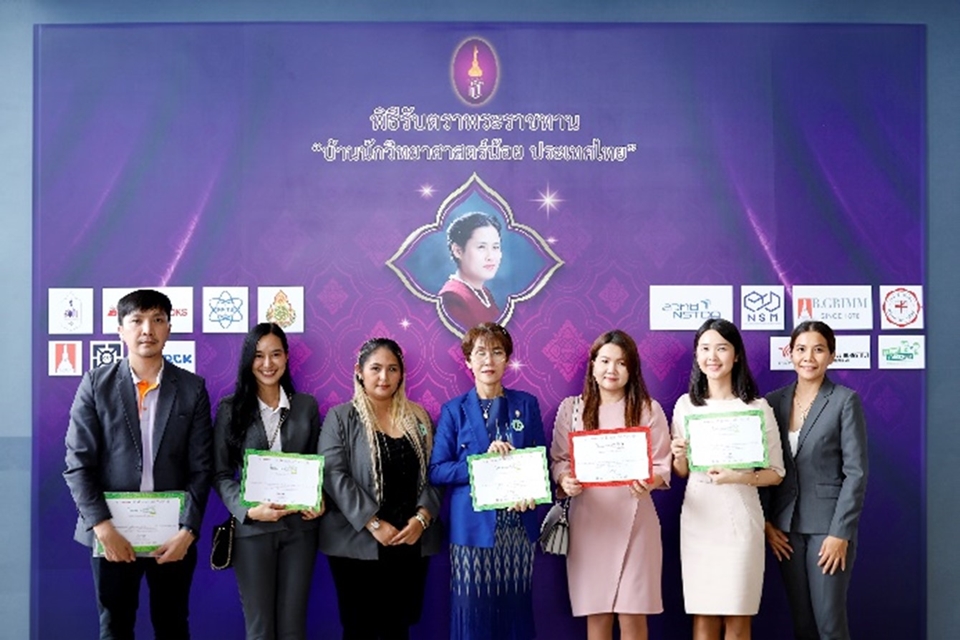
In 2025, more than 16 schools in B.Grimm Power’s network underwent evaluation and were awarded the royally bestowed title of “Little Scientists’ House Thailand 2025”, reflecting the programme’s tangible success in advancing science learning while instilling sustainable development concepts in Thai children.

Business Benefit Indicators
- Align with one of B.Grimm Power’s sustainability strategic goals to foster STEM education at all levels to support economic prosperity and future growth.
- Develop capable individuals who may grow into highly skilled employees for B.Grimm Power or related industries in the future

Social and Environmental Benefit Indicators
- Enhance education and lay the foundation of science learning skills for preschool and primary school children (more than 215,422 students have benefited since the project’s inception)
- Improve the quality of teachers in the technical aspects of managing science learning for preschool and primary school children (in 2025, more than 310 teachers participated in training within the project)
- Support and align with SDG Targets 4.2, 4.7 and 8.6.
B.Grimm School Camp
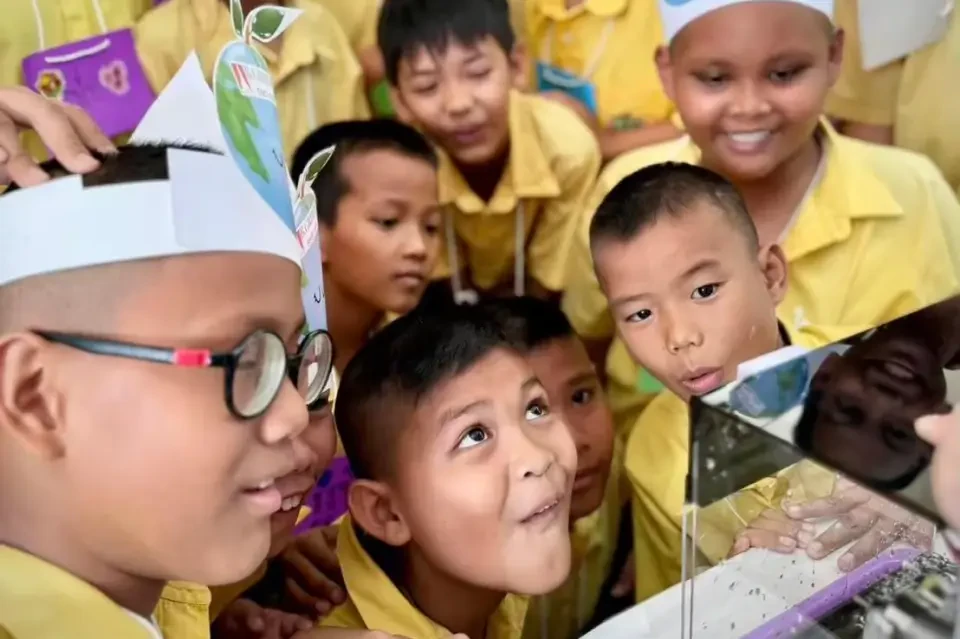
The B.Grimm School Camp is a short-term education camp designed to strengthen knowledge and relationships between power plants and nearby communities. It engages young learners through the STEM education model and the knowledge framework of the Little Scientists’ House project, equipping them with essential skills such as analytical thinking, systematic problem-solving, teamwork, and effective communication. With a focus on energy-related topics aligned with B.Grimm Power’s business, the camp integrates Science, Mathematics, English, and the Arts to create a well-rounded, engaging, and memorable learning experience. This initiative reflects our commitment to advancing STEM education among young learners, a foundational skill set for the power and utilities industry and the nation’s economic growth. By fostering 21st-century competencies, the programme equips students with the knowledge and skills needed to pursue future education and career opportunities, ensuring they are well-prepared for long-term success. Since its inception, more than 977 students have participated in the programme.
Business Benefit Indicators
- Align with one of B.Grimm Power’s sustainability strategic goals to foster STEM education at all levels to support economic prosperity and future growth.
- Develop capable individuals who may grow into highly skilled employees for B.Grimm Power or related industries in the future
Social and Environmental Benefit Indicators
- Enhance education and lay the foundation of STEM, English language, and arts learning skills for primary school children (977 students have benefited since the project’s inception)
- Support and align with SDG Targets 4.2, 4.7 and 8.6.
University and vocational levels
B.Grimm Power is committed to enhancing hands-on STEM experience for higher education and vocational students, with a goal of engaging over 300 students by 2030 through training programmes and partnerships with leading educational institutions.
Chitralada Work-Integrated Learning Program
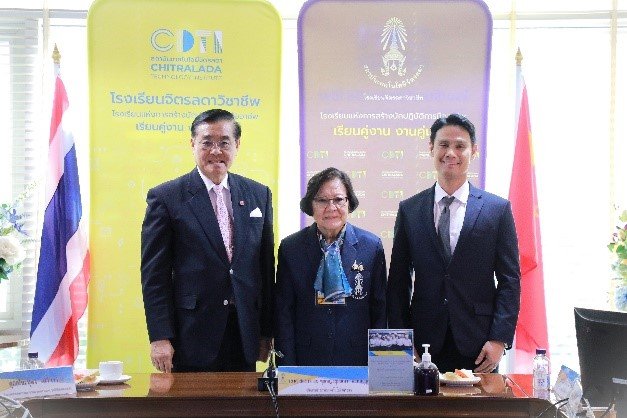
B.Grimm Power places importance on developing a quality workforce alongside strengthening the education system. We initiated the Chitralada Work-Integrated Learning Program in collaboration with Chitralada Technology Institute (CDTI), a royally initiated educational institution dedicated to developing vocational and engineering talent with knowledge, skills and integrity through real-world workplace learning. This partnership systematically connects the education sector with the energy industry, covering both the Dual Vocational Education System and skills development through the Skills4Tech programme, to prepare young people for careers and meet future workforce needs. The programme comprises the following sub-projects, designed in line with the education context and the direction of energy industry development:
Dual Vocational Education
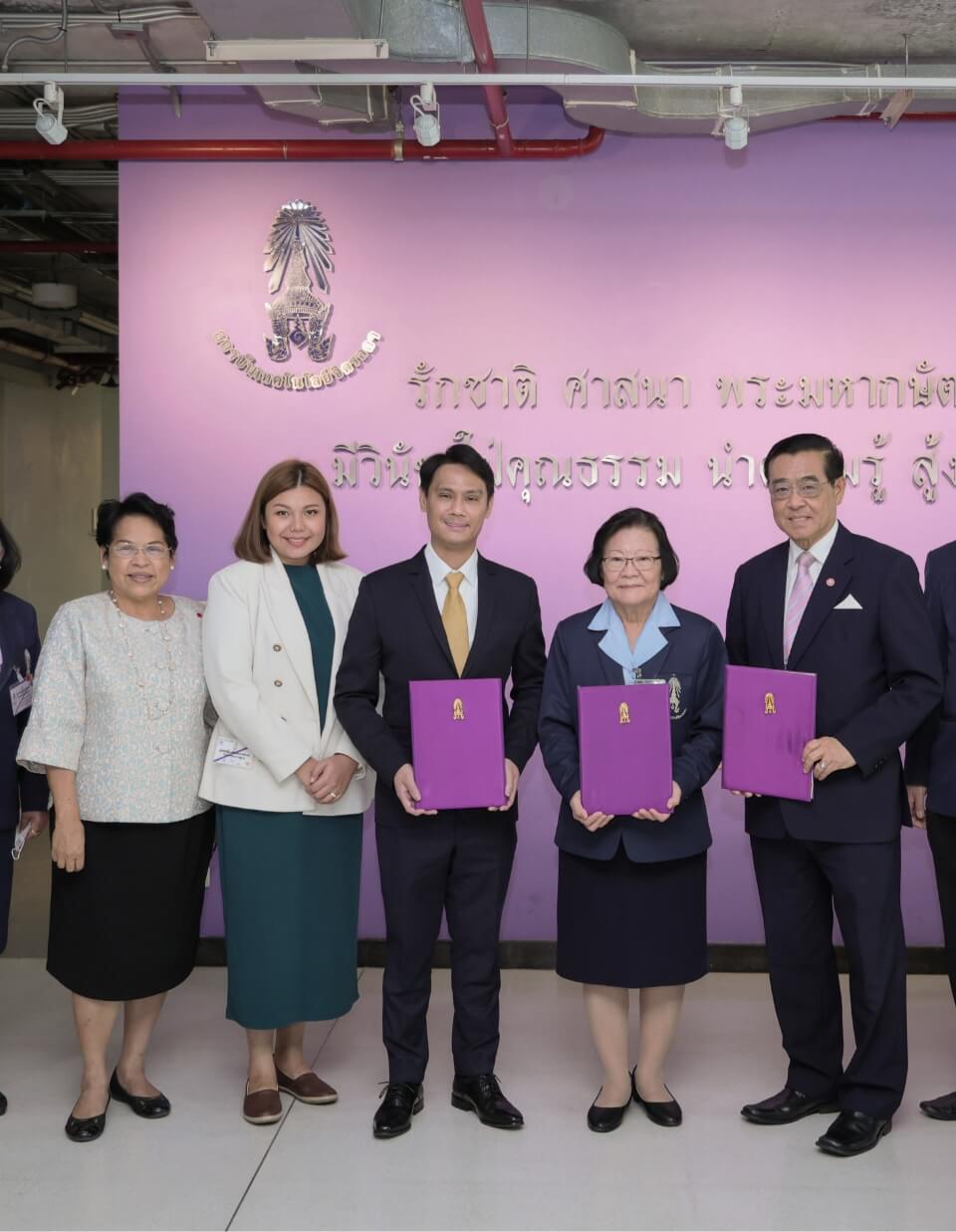
For more than 15 years, B.Grimm Power, Chitralada School (Vocational), Map Ta Phut Technical College, Rayong, and the Association of Private Power Producers have jointly run the Vocational Electrical System Engineering Practice College (V-EsEPC) as part of the Dual Vocational Education System. First conceived and developed in Germany, this schooling system has been proven crucial to the development of a country’s economic competitiveness. Vocational students are selected from vocational colleges to receive on-the-job training while still studying. The programme seeks to develop their knowledge and skills in electrical engineering and maintenance by providing them with real-life work experience, elevating their education and producing skilled workers for a variety of occupations that support national growth and B.Grimm Power’s businesses, while also lowering our recruitment costs. A total of 142 dual vocational students have participated in the programme from academic year 2011 to 2025.
Business Benefit Indicators
- Align with one of B.Grimm Power’s sustainability strategic goals to foster STEM education at all levels to support economic prosperity and future growth.
- Expand the pool of skilled professionals with expertise relevant to B.Grimm Power’s operations.
Social and Environmental Benefit Indicators
- Increase the number of students/youths who receive training in the dual vocational education system (a total of 142 dual vocational students have participated since the project’s inception up to 2025)
- Support and align with SDG Targets 4.3, 4.4 and 8.6.
Skills4Tech – Technical Teaching and Learning for Industry 4.0 Technicians Program
Launched in 2022, the Skills4Tech programme has continued to expand, with the Kenan Foundation Asia serving as the lead implementing organisation in 2025. The programme aims to enhance the capabilities of vocational teachers and lecturers through blended learning combined with simulation technology, strengthening STEM skills and 21st-century competencies in line with industry needs. Since its launch, 23 teachers and lecturers have participated in capacity development, and more than 733 vocational students have benefited from this learning approach. The number of institutions adopting blended learning continues to grow, alongside an expanding network of Master Trainers who transfer knowledge to other institutions. The programme also evaluates learning outcomes by comparing blended learning with traditional teaching, showing significant differences in results and demonstrating the effectiveness of digital technology and learning innovation in developing learners’ potential.
From 2026 onwards, the programme will build on this work by focusing on developing Green Skills alongside technology skills, preparing the workforce for the transition to a green economy and supporting the long-term sustainable growth of the energy industry.
Business Benefit Indicators
- Align with one of B.Grimm Power’s sustainability strategic goals to foster STEM education at all levels to support economic prosperity and future growth.
- Expand the pool of skilled professionals with expertise relevant to B.Grimm Power’s operations.
Social and Environmental Benefit Indicators
- Develop students with STEM and 21st-century skills through virtual learning technologies, enhancing academic performance and workforce readiness (a total of 733 students have participated since the programme’s inception)
- Empower teachers and lecturers to integrate technology into teaching, fostering a network of master trainers to extend knowledge to other institutions (a total of 23 teachers/lecturers have participated since the programme’s inception)
- Support and align with SDG Targets 4.3, 4.4 and 8.6.